 Itqān
Start
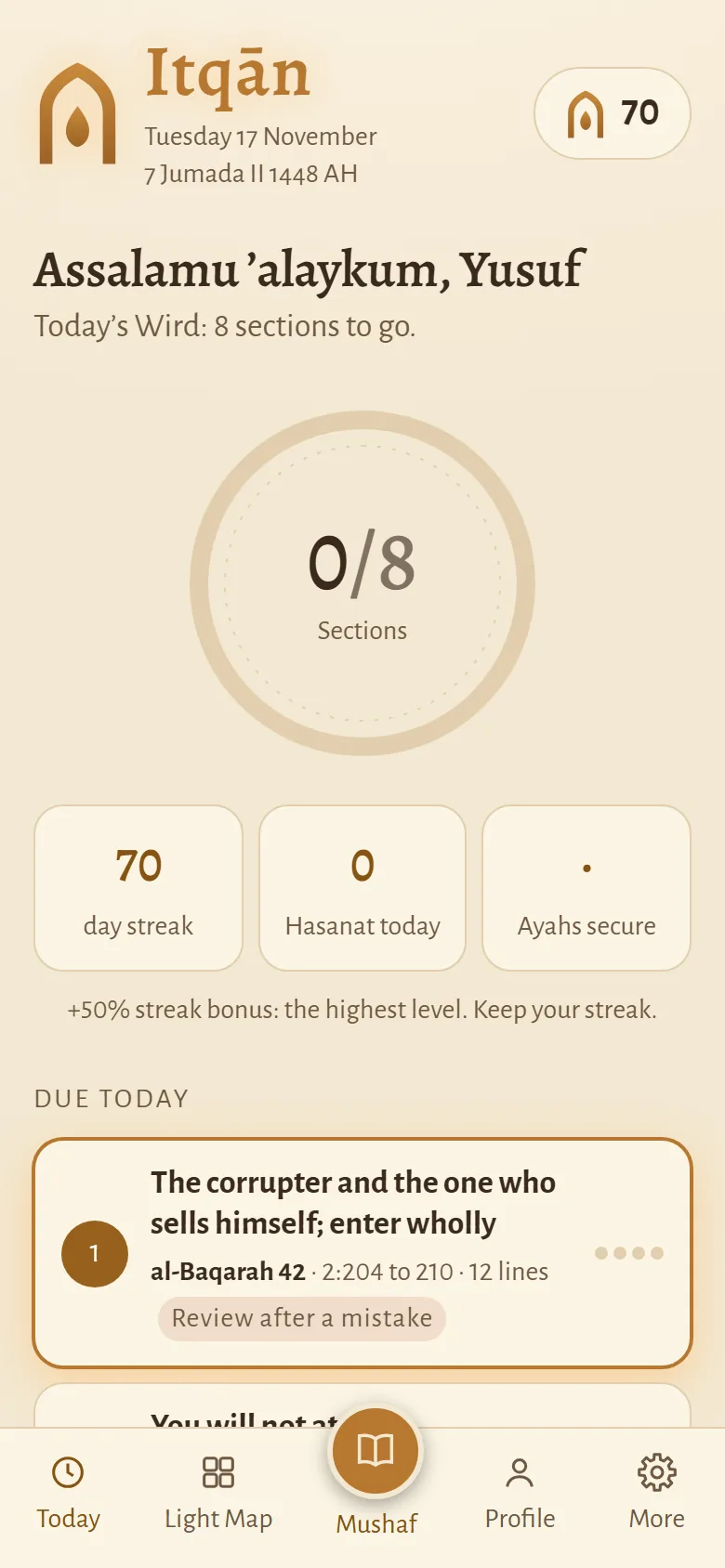
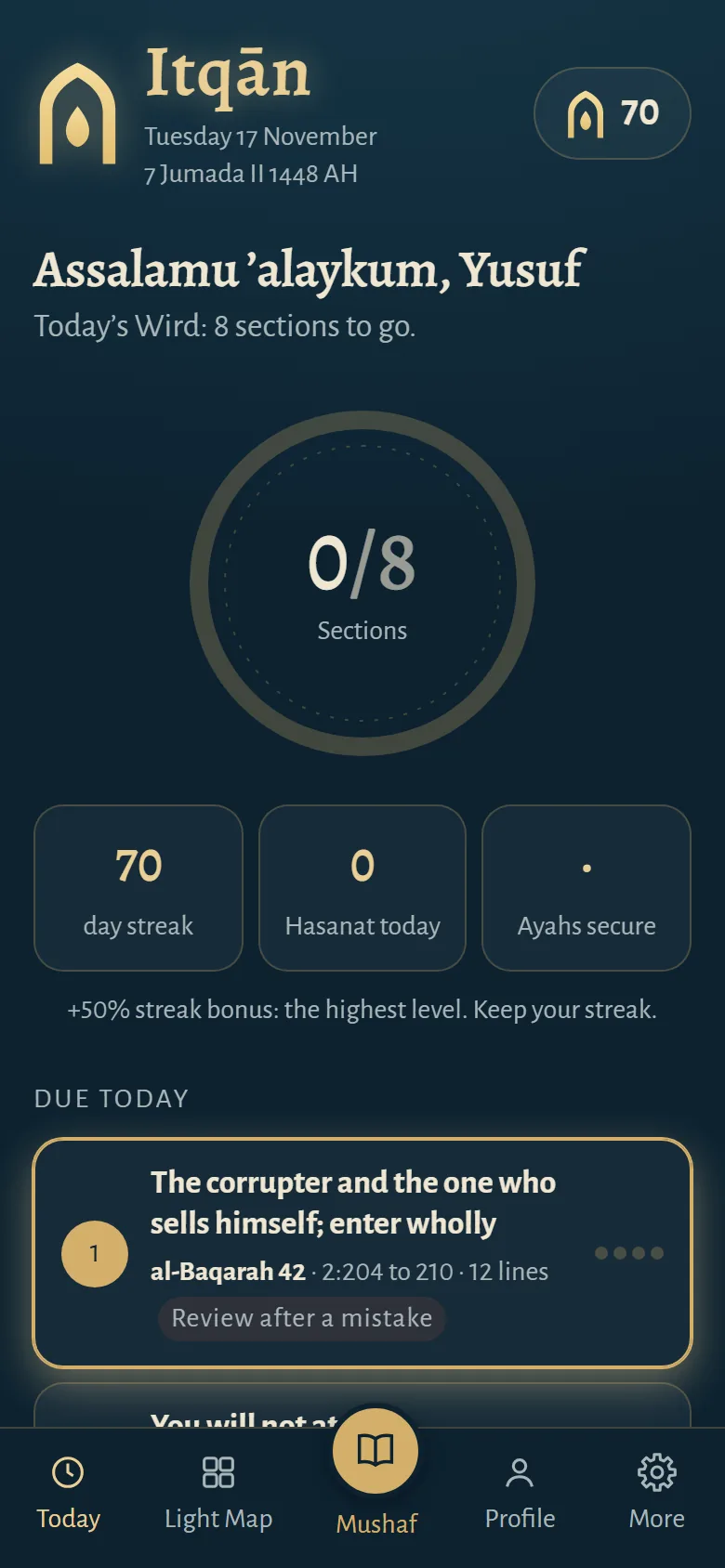
Today shows what is due: your wird, meaning the reviews due today, and what you are memorising new. You set your daily amount yourself, per weekday if you like.
إِتْقَان
al-Itqān: to master something fully
Itqān helps you keep what you have memorised of the Qurʾān. It plans your daily review, the muraja‘a, shows you where you stumble and guides you until it holds firm.
Coming soon to the App Store and Google Play. Free. No ads. Seven languages.
The Prophet ﷺ said
تَعَاهَدُوا الْقُرْآنَ فَوَالَّذِي نَفْسِي بِيَدِهِ لَهُوَ أَشَدُّ تَفَصِّيًا مِنَ الْإِبِلِ فِي عُقُلِهَا
“Keep up the Qurʾān. By Him in whose hand is my soul: it escapes faster than camels from their hobbles.”
Reported by al-Bukhārī (5033)
Memorising is the beginning. Keeping it is the work.
Itqān takes care of the planning. The reciting is yours.
Four simple steps a day. The app takes care of the rest.
Today shows what is due: your wird, meaning the reviews due today, and what you are memorising new. You set your daily amount yourself, per weekday if you like.
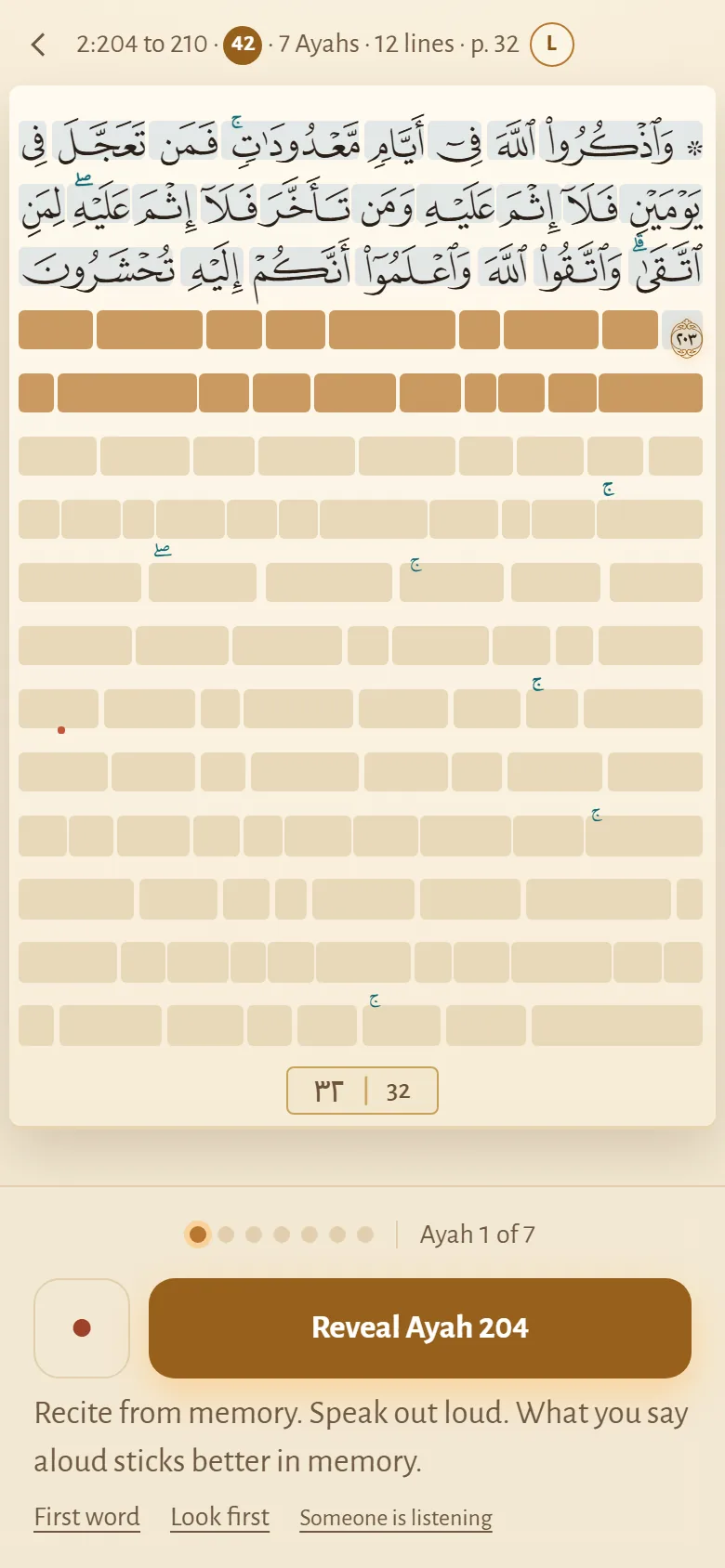
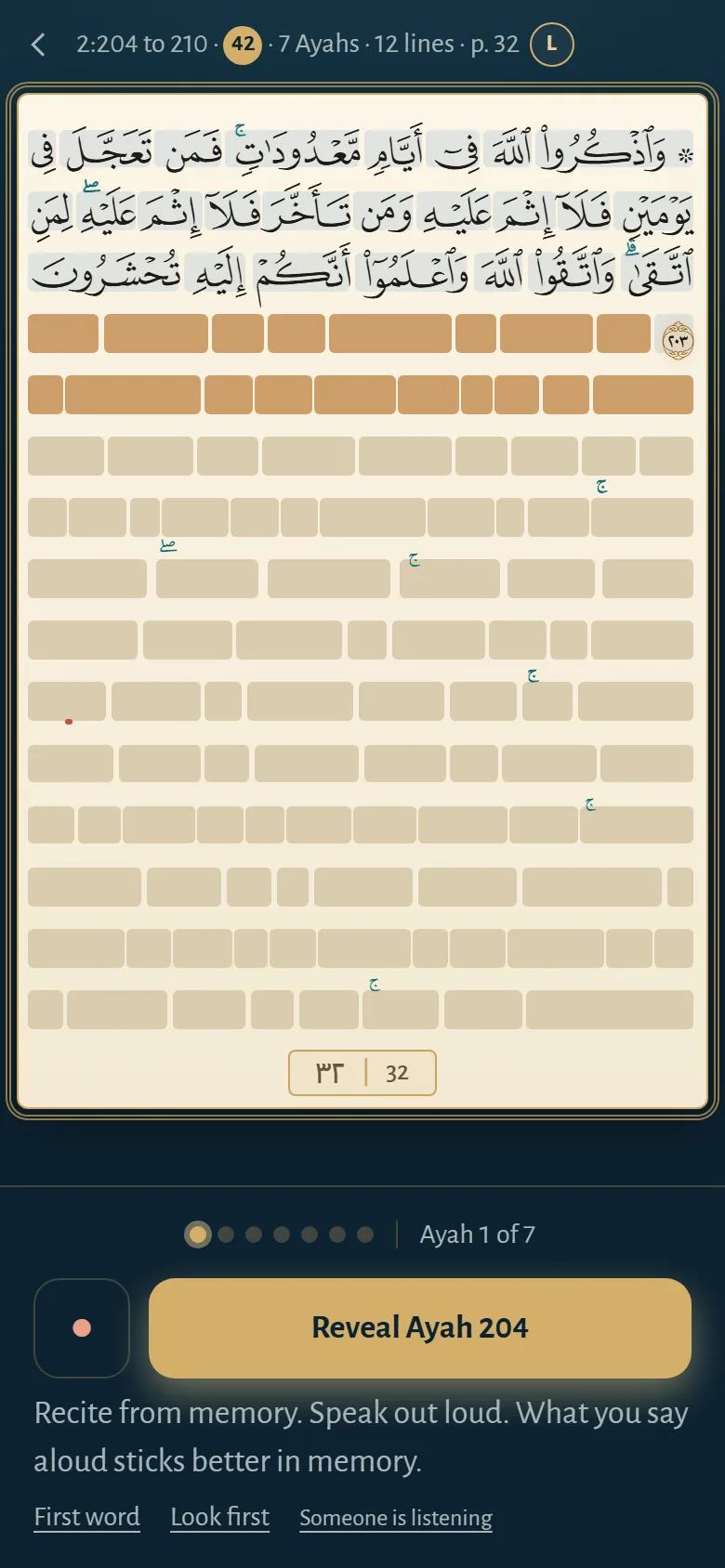
You see the page as in the Muṣḥaf, with the text covered, and recite from memory. If you get stuck, “First word” helps, or you look over the section first.
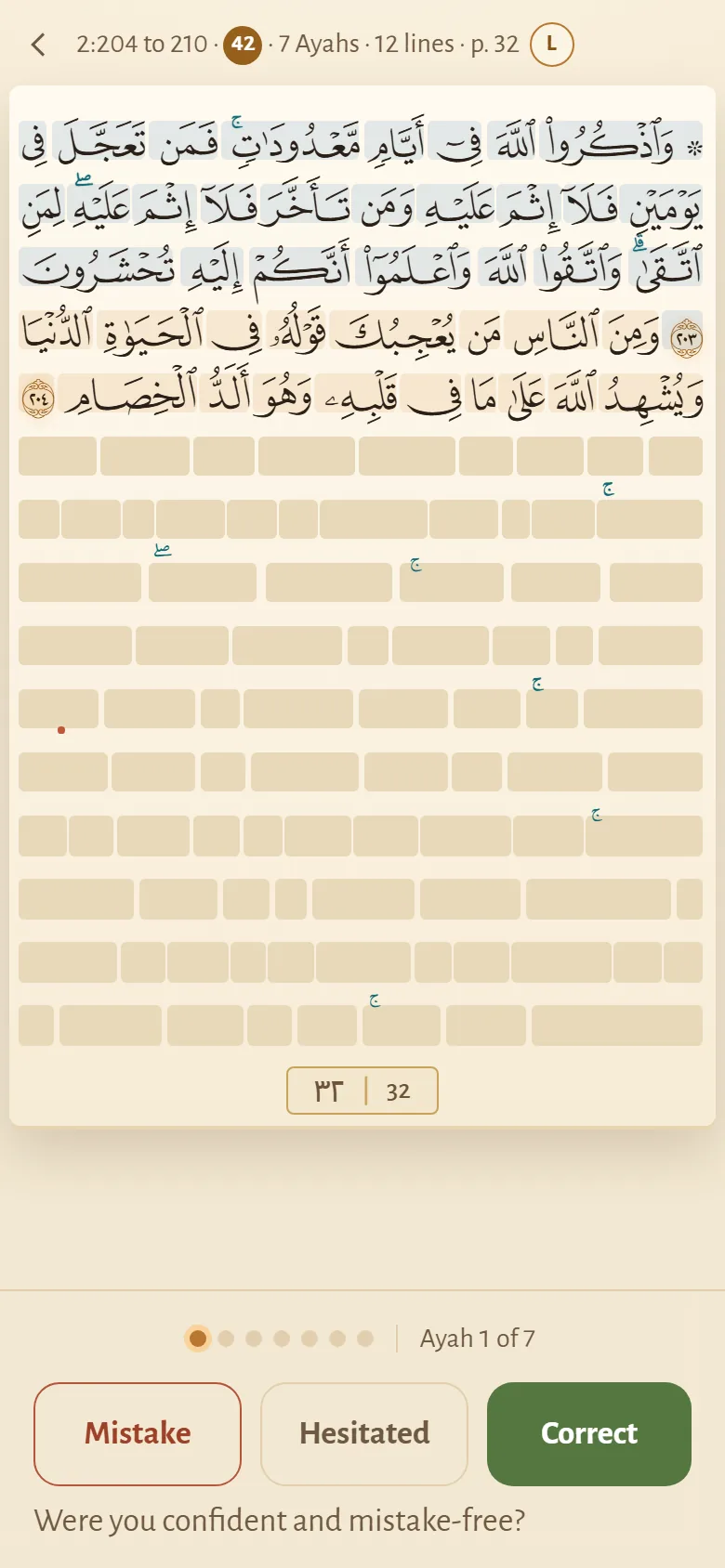
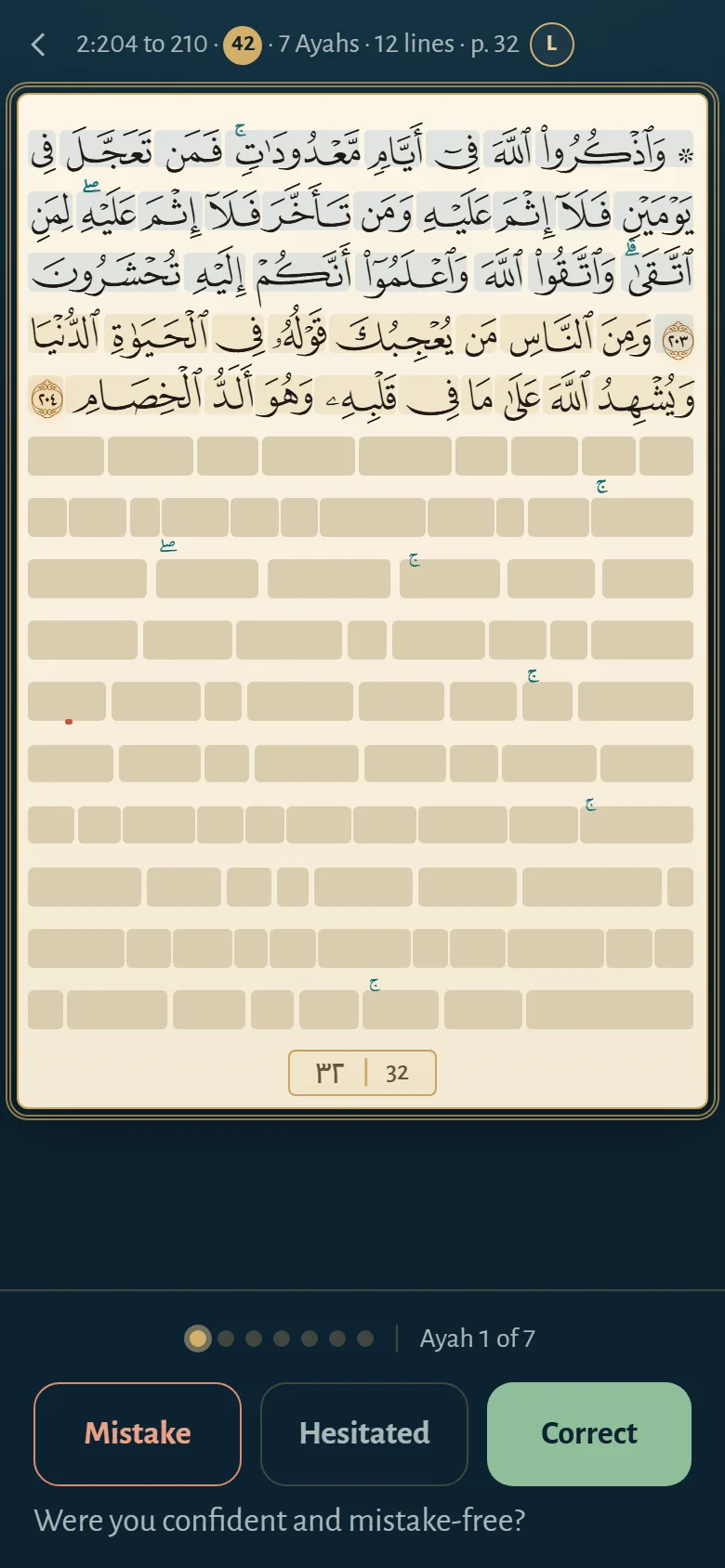
Then you uncover the text and rate yourself verse by verse: Correct, Hesitated or Mistake. The more honestly you rate, the better your reviews fit.
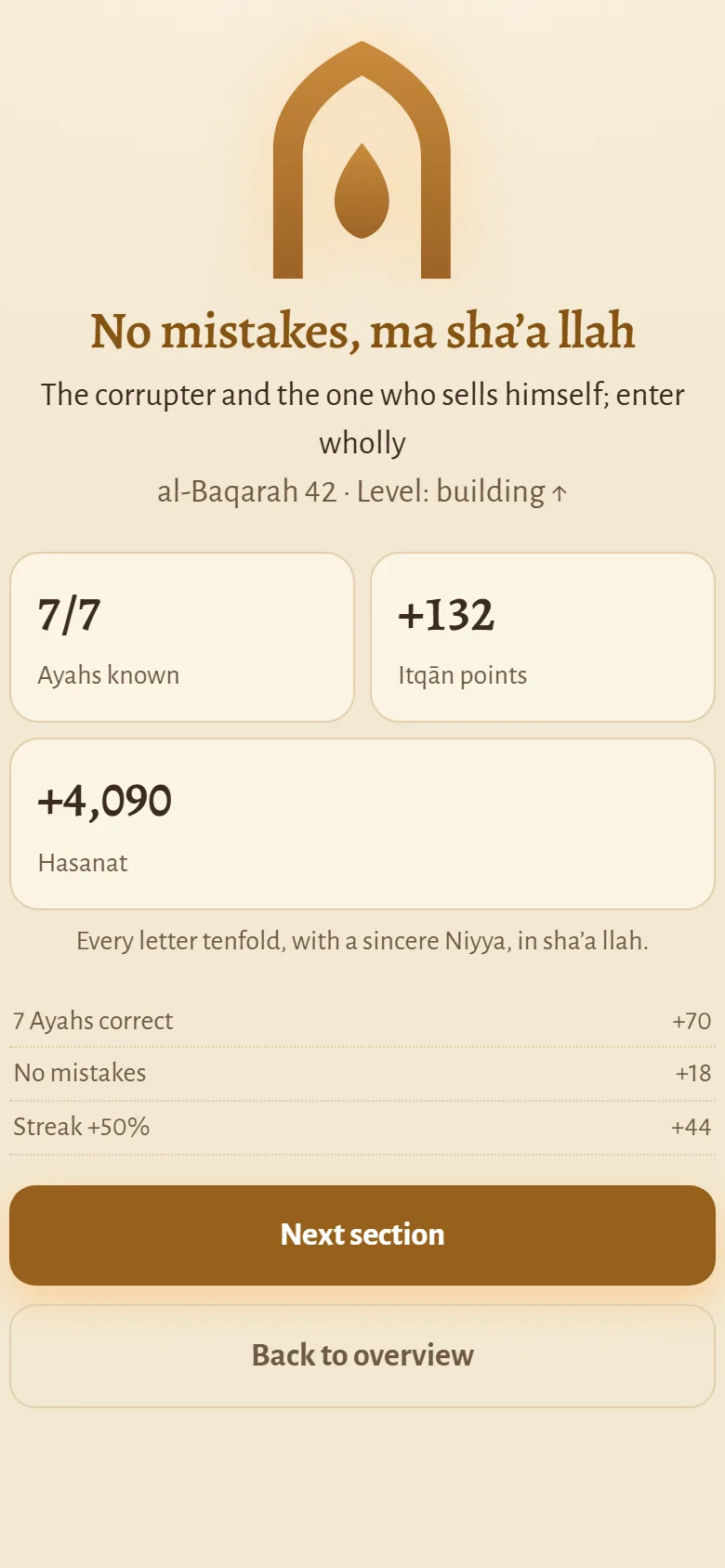
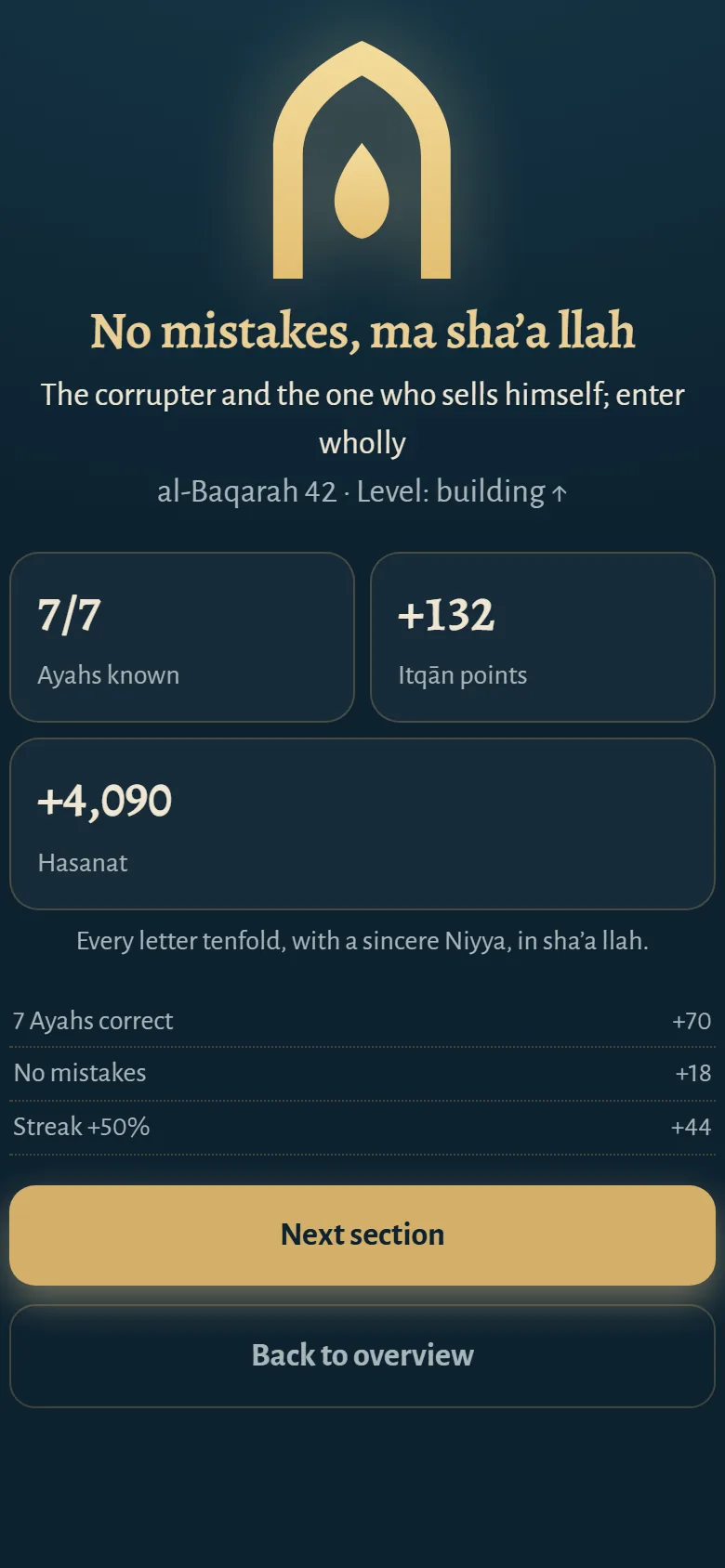
Itqān points, your streak of completed days and your ḥasanāt, counted by the letters you recite, show that you keep at it. You can hide the ḥasanāt if you like.
Itqān follows what teachers of ḥifẓ, memorising the Qurʾān, have passed on for generations: the Qurʾān stays when you review it at intervals, and more often where it is still shaky. Learning research confirms it.
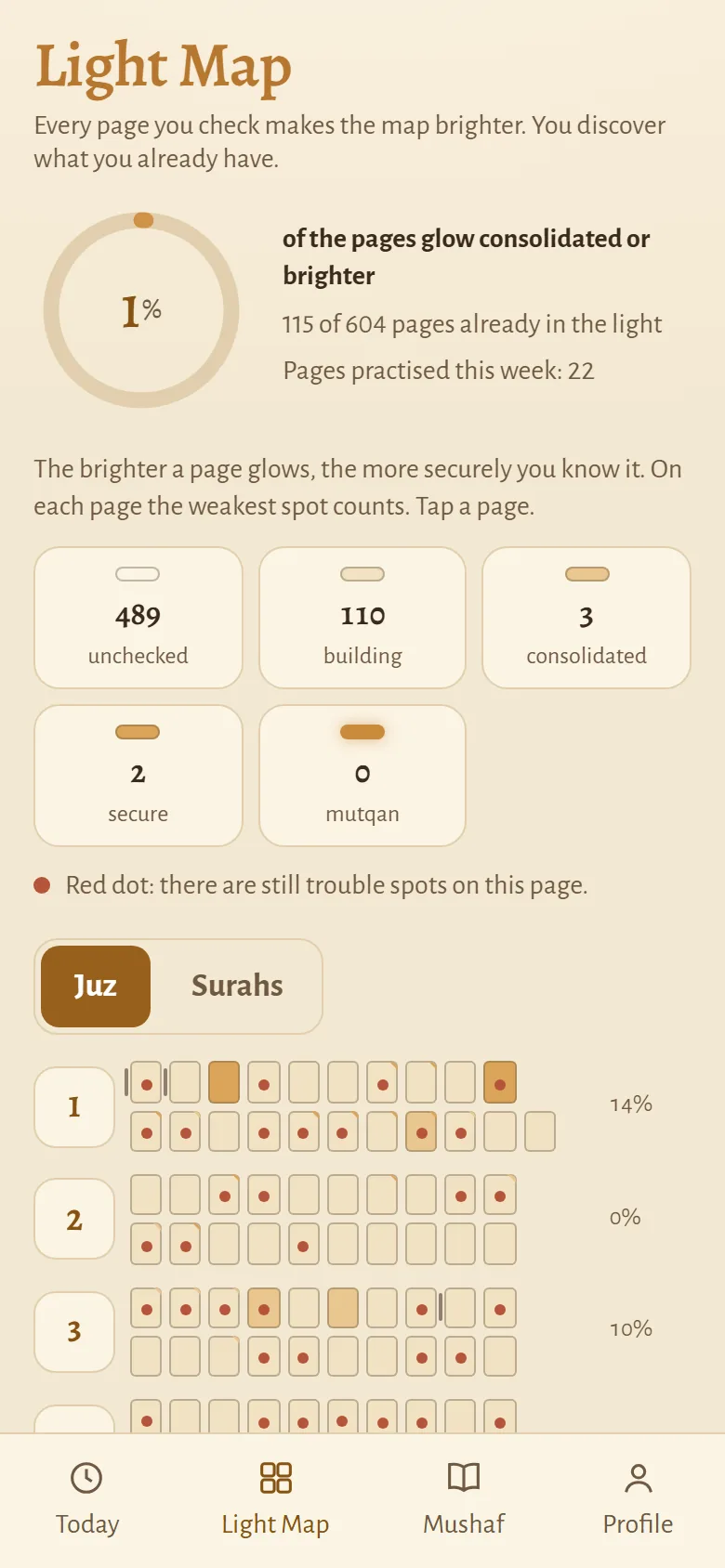
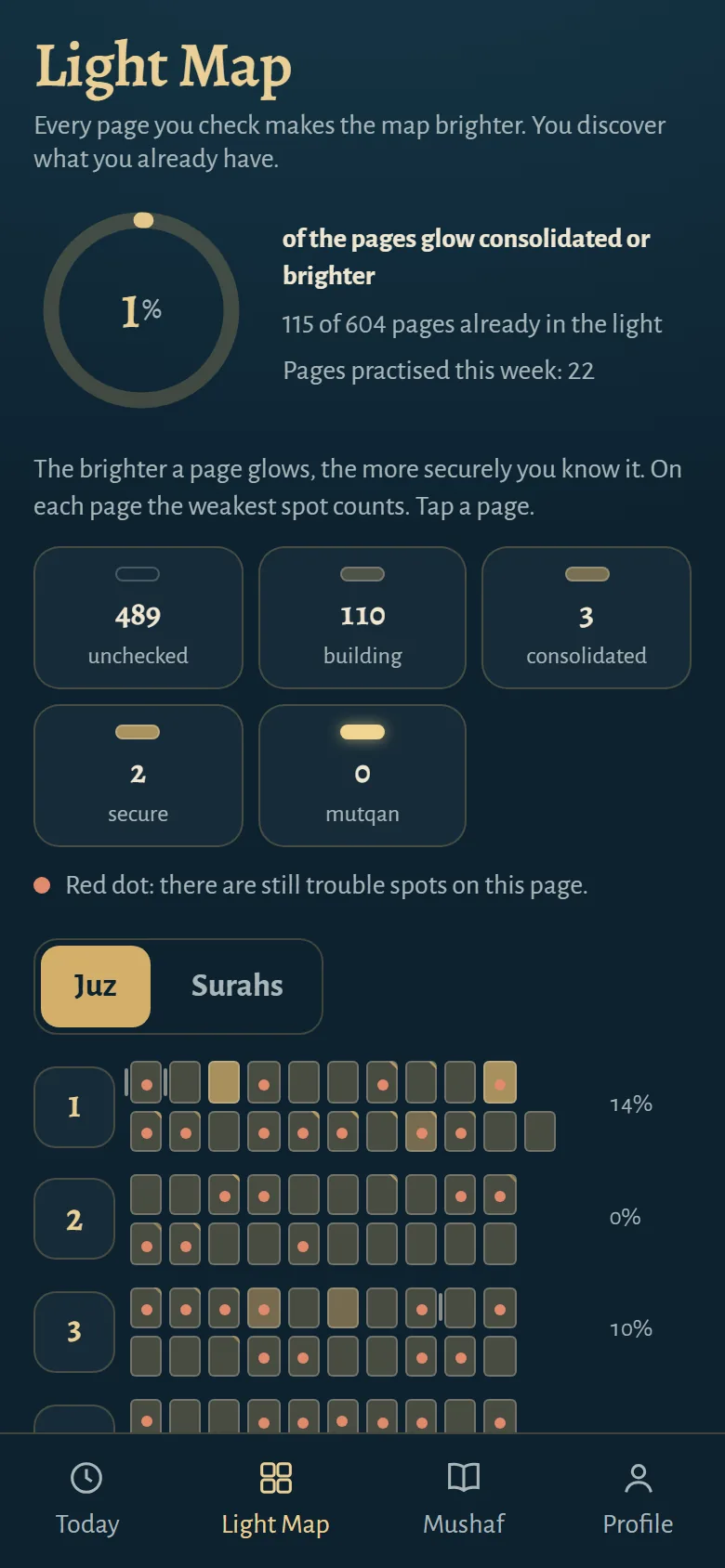
Every section moves through five steps: new, building, consolidated, secure and finally mutqan, mastered with precision. The steps fall into three phases: al-Ḥifẓ (intake), aḍ-Ḍabṭ (securing) and al-Itqān (mastery).
New material comes back after 1, 3 and 7 days. What sits firmly comes back much later. A mistake brings a section back sooner, and so do hesitation and word help.
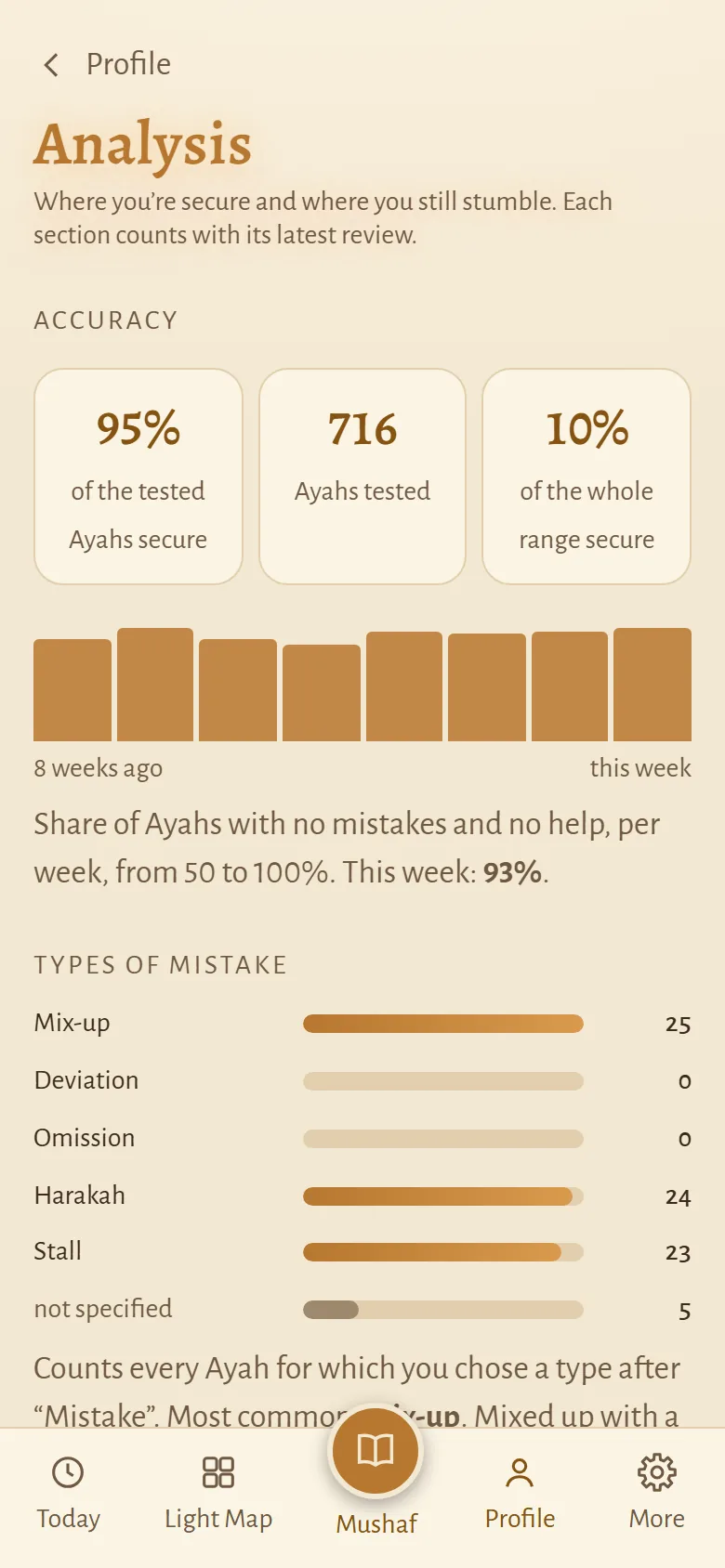
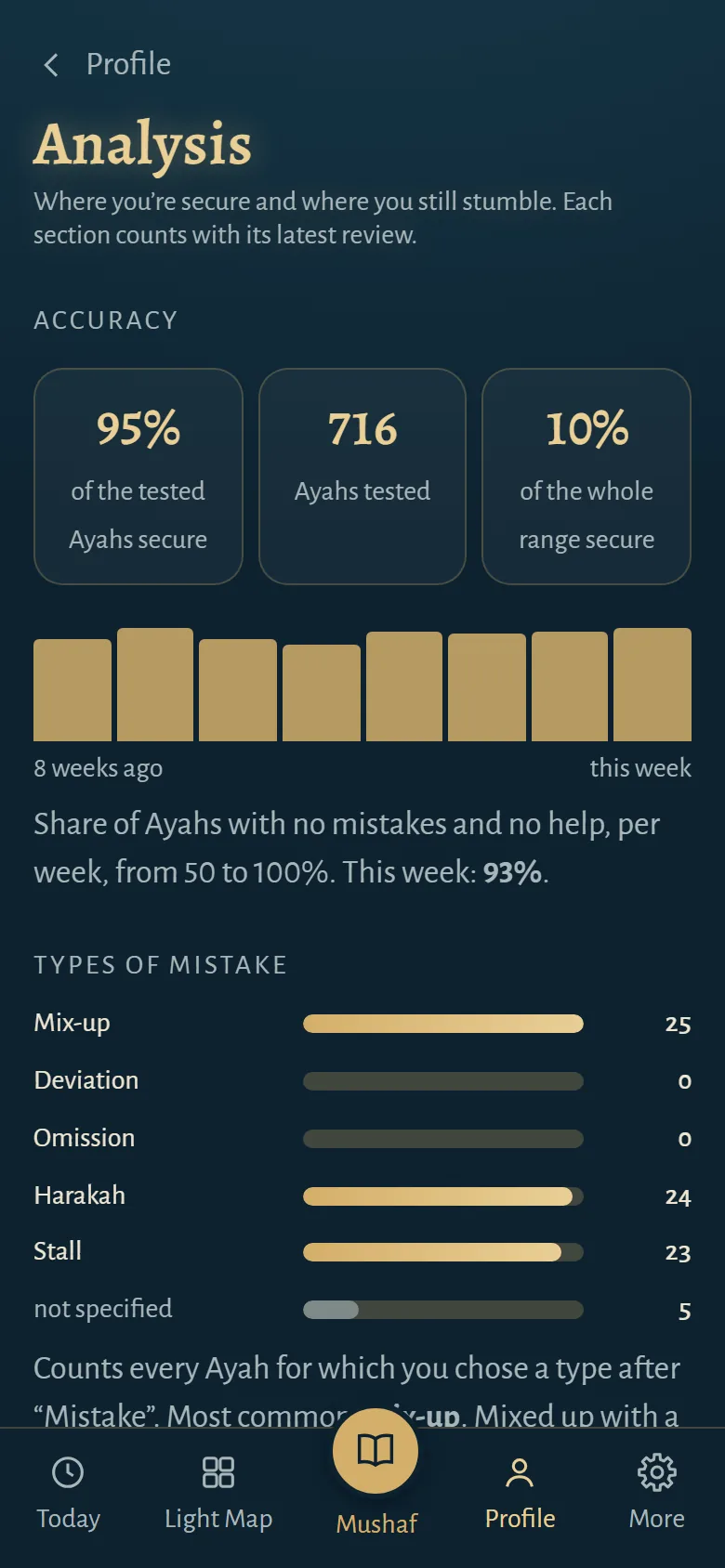
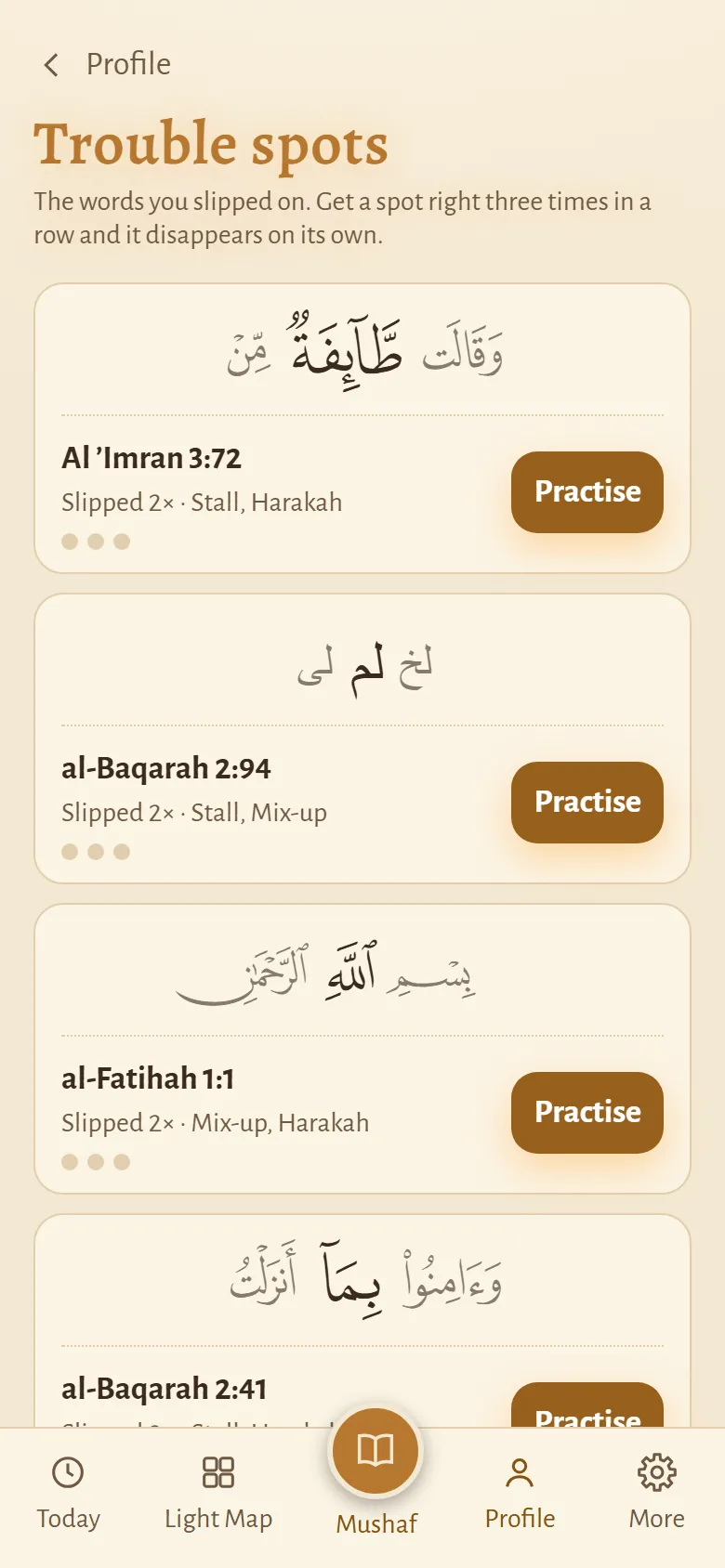
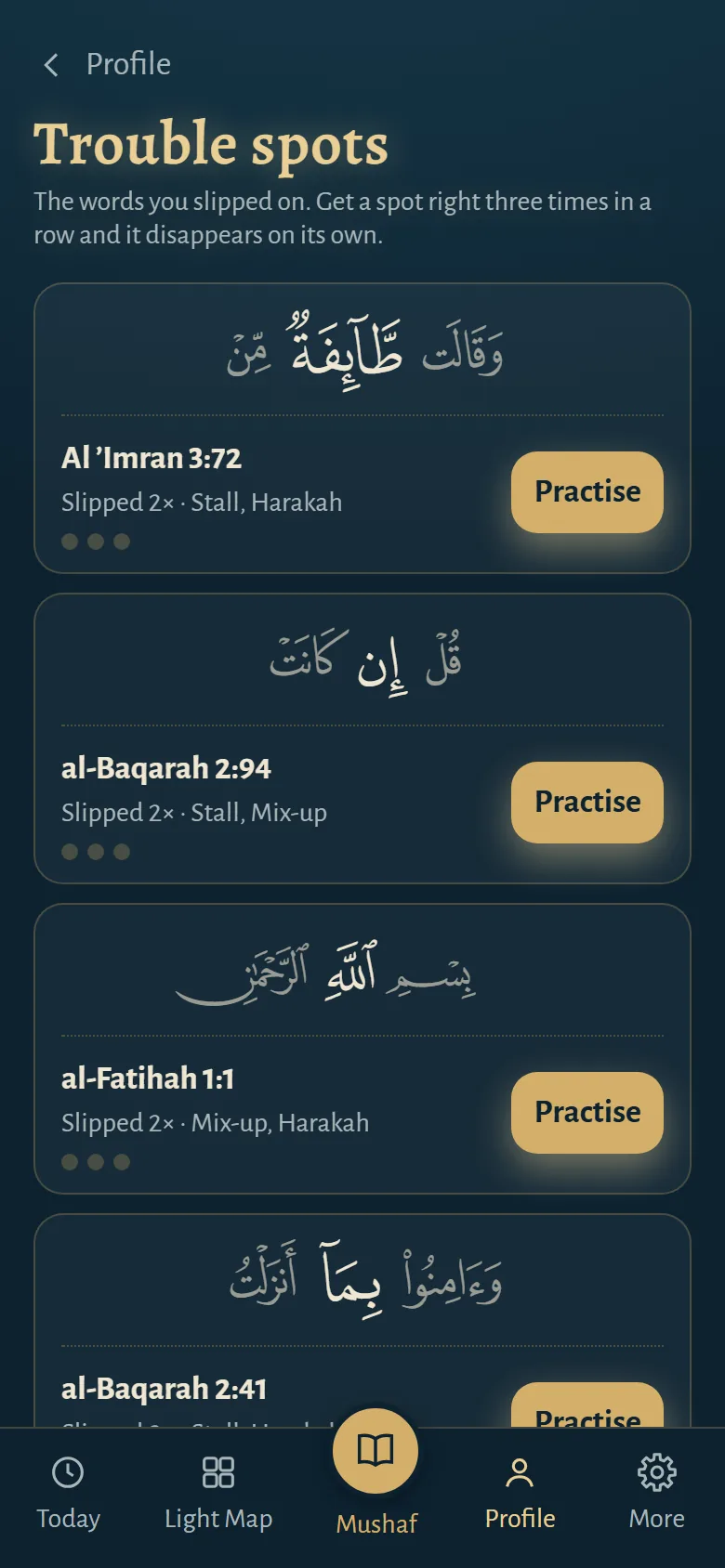
You tap the word and choose the kind of mistake. This builds your list of trouble spots for focused practice. If you strayed into a similar passage, Itqān shows you that group of similar verses first.
An illustration. Your map shows your real progress page by page, and on each page the weakest spot counts. Move your finger or the pointer over the sūrahs.
114 sūrahs. Each one lights up as you make it firm.
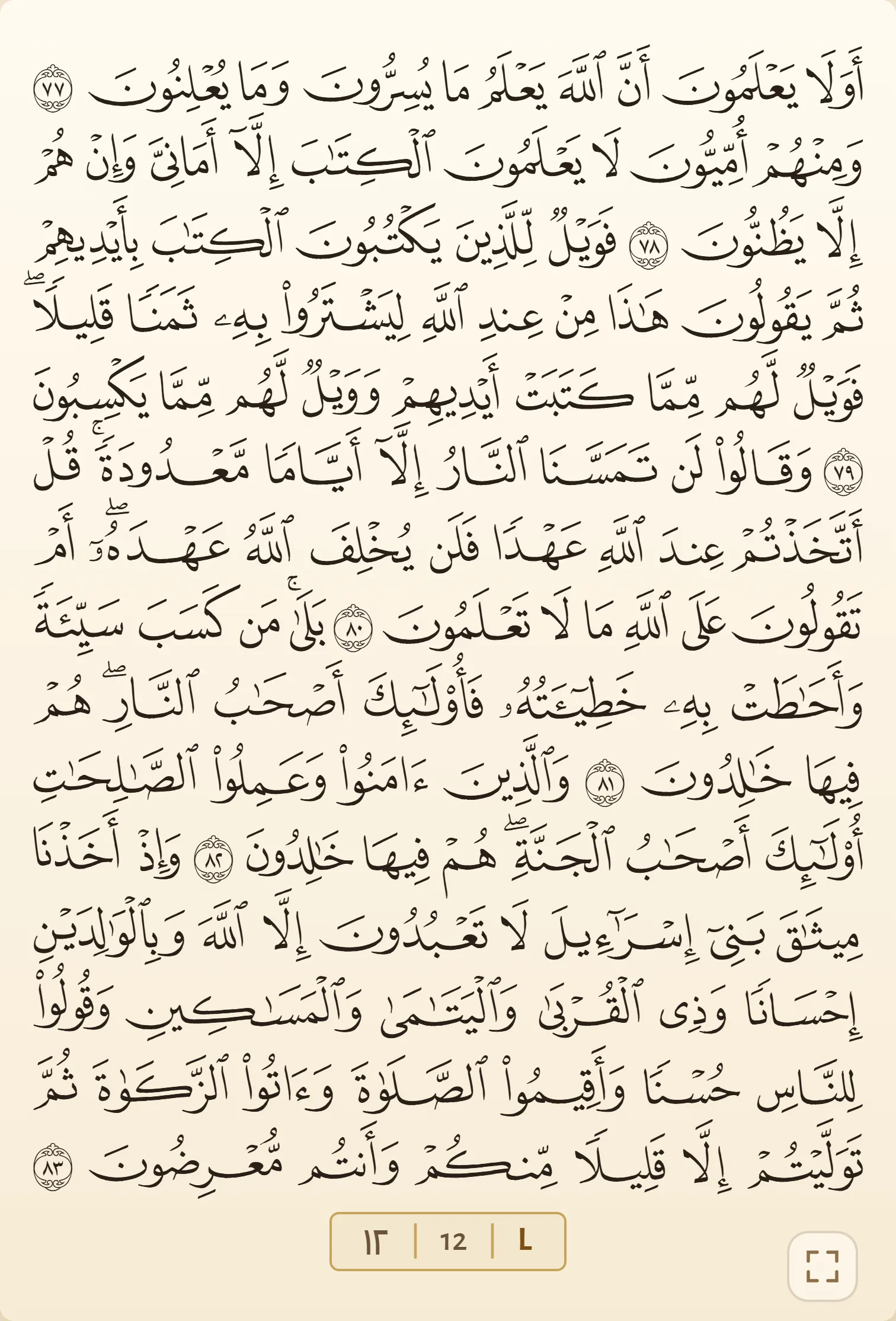
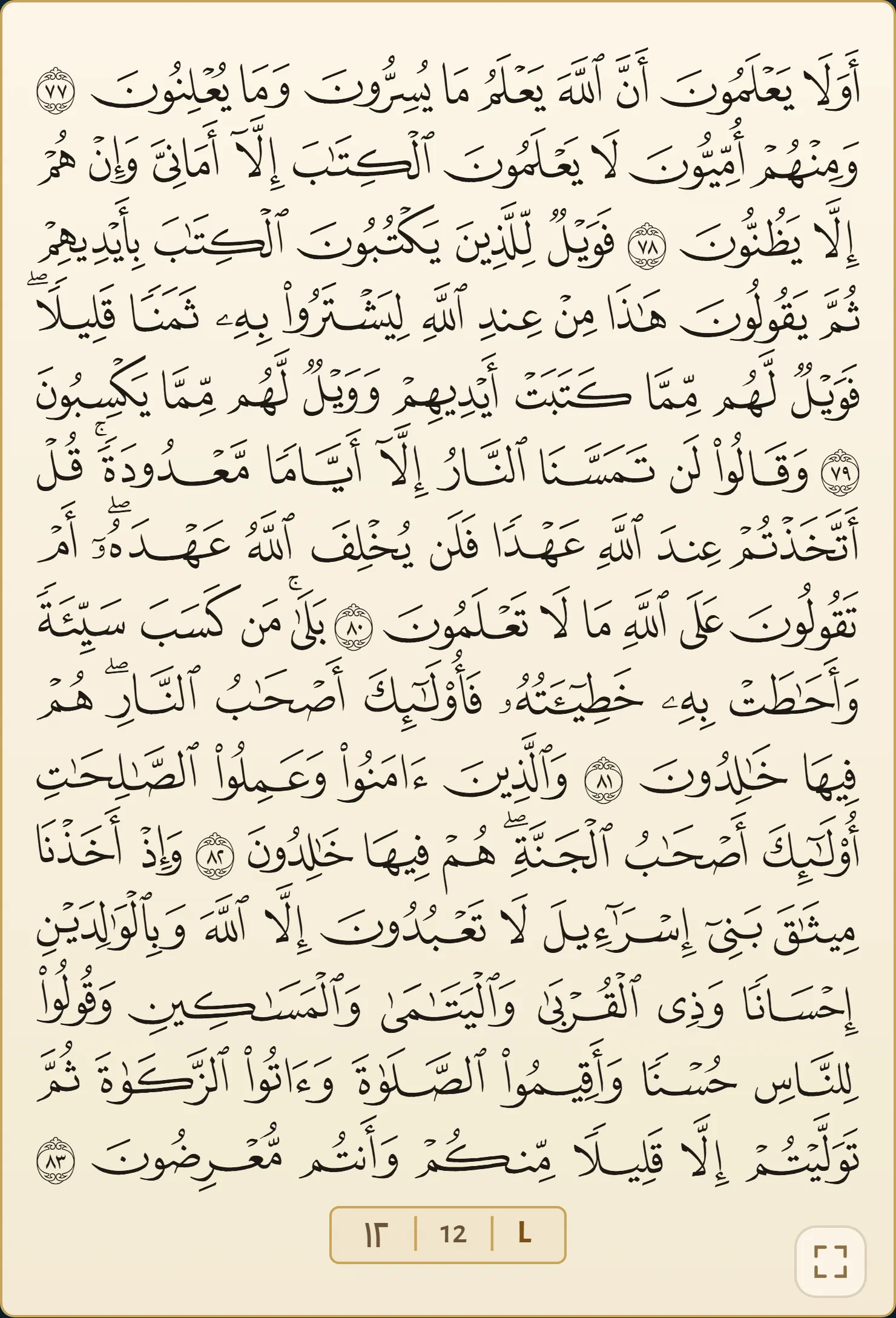
True to every page, in the script of the Madinah Muṣḥaf: 604 pages, 30 juzʾ, 114 sūrahs. You practise on exactly the page you know from reading.
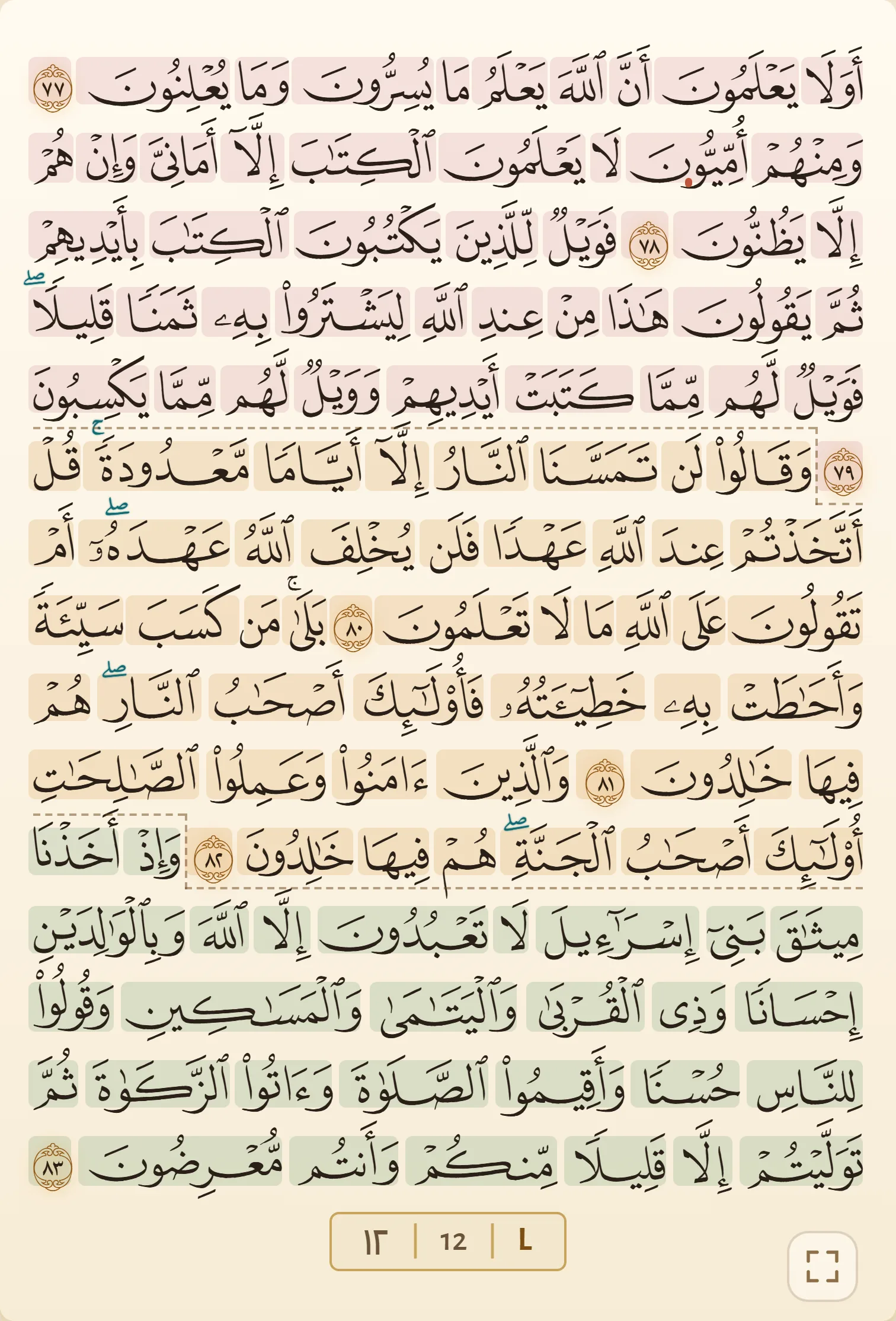
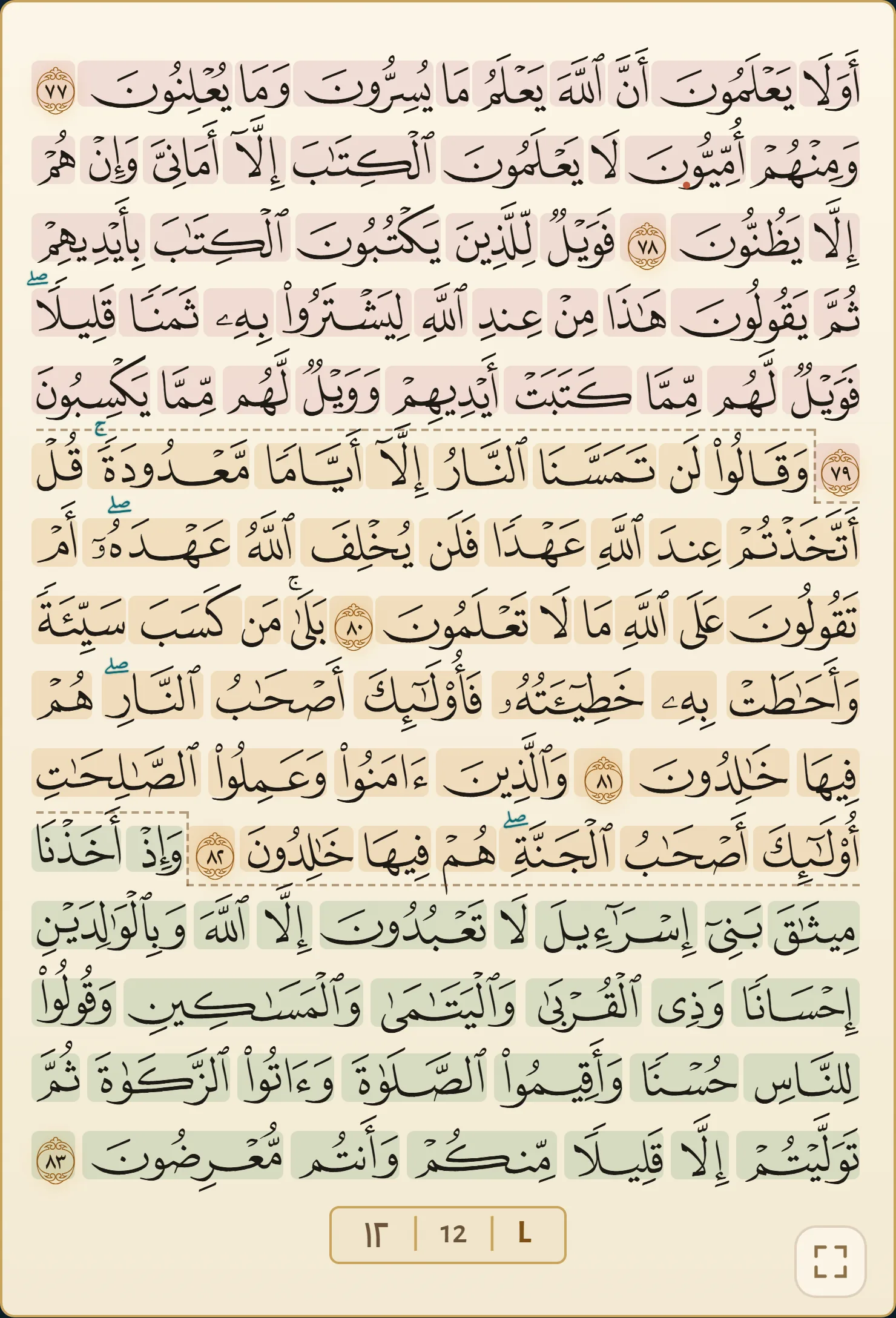
Itqān colours what your eye should remember. Drag the slider to compare the same page without and with colour.
Every section has its own tint and fine boundary lines, so you see at a glance where a passage begins and ends.
In gold, with a clear number. Your eye remembers where a verse ends, and with it the whole page.
In teal, clearly set apart from the text.
If you prefer it calmer, turn the colours off or choose a softer variant.
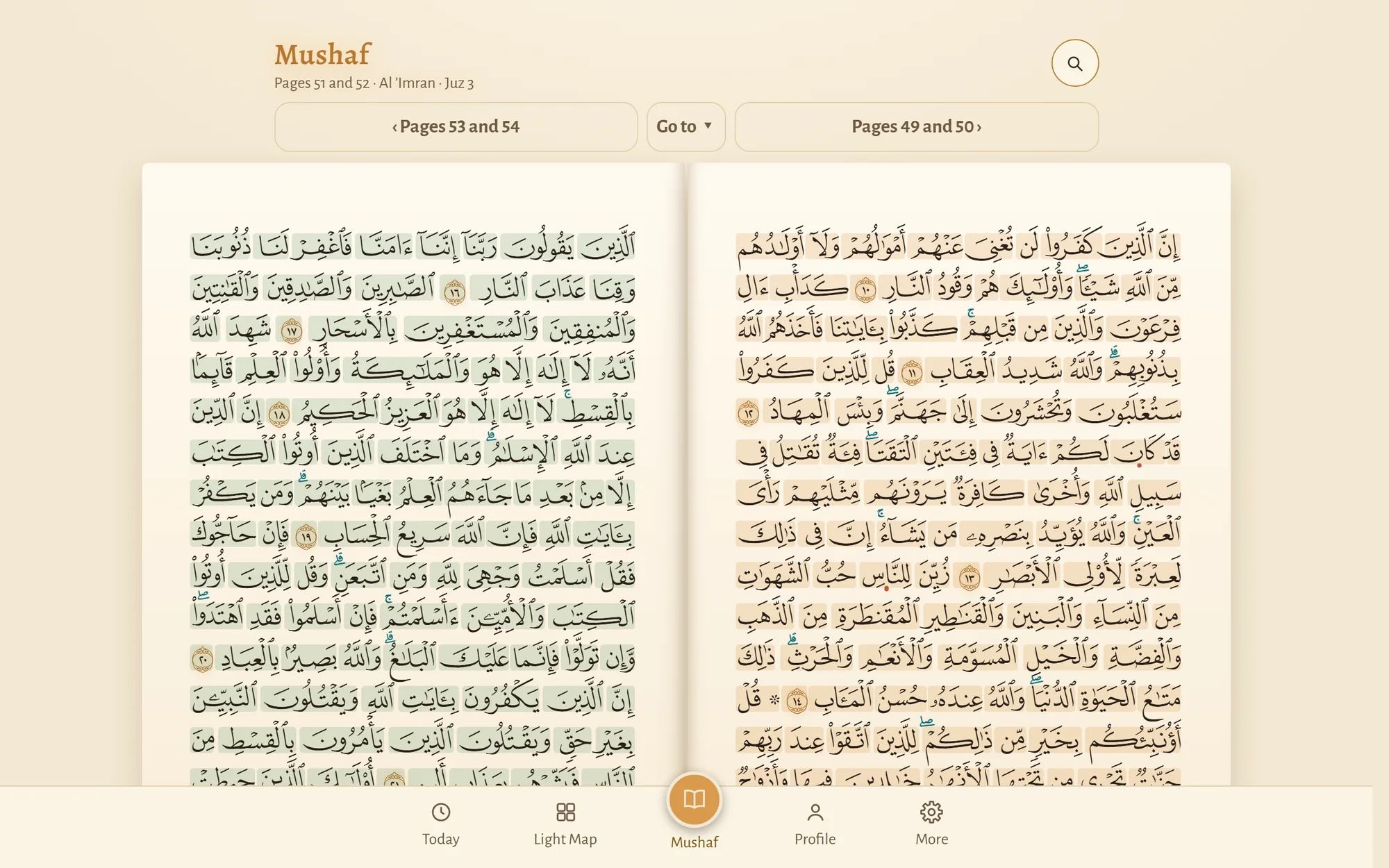
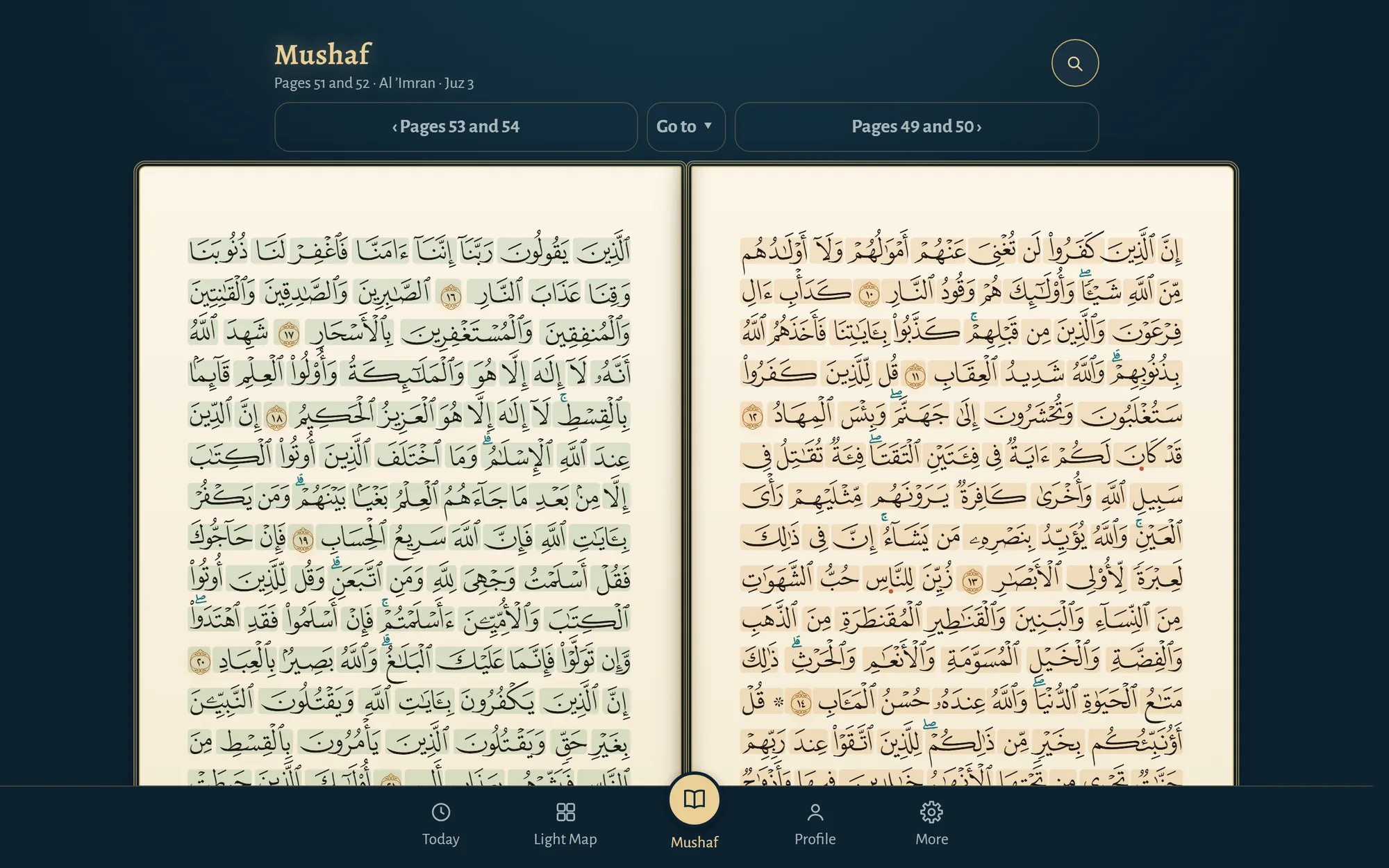
On tablets and computers, two pages sit side by side like an open Muṣḥaf, with zoom and full screen.
You never have to use any of them. They are there when you need them.
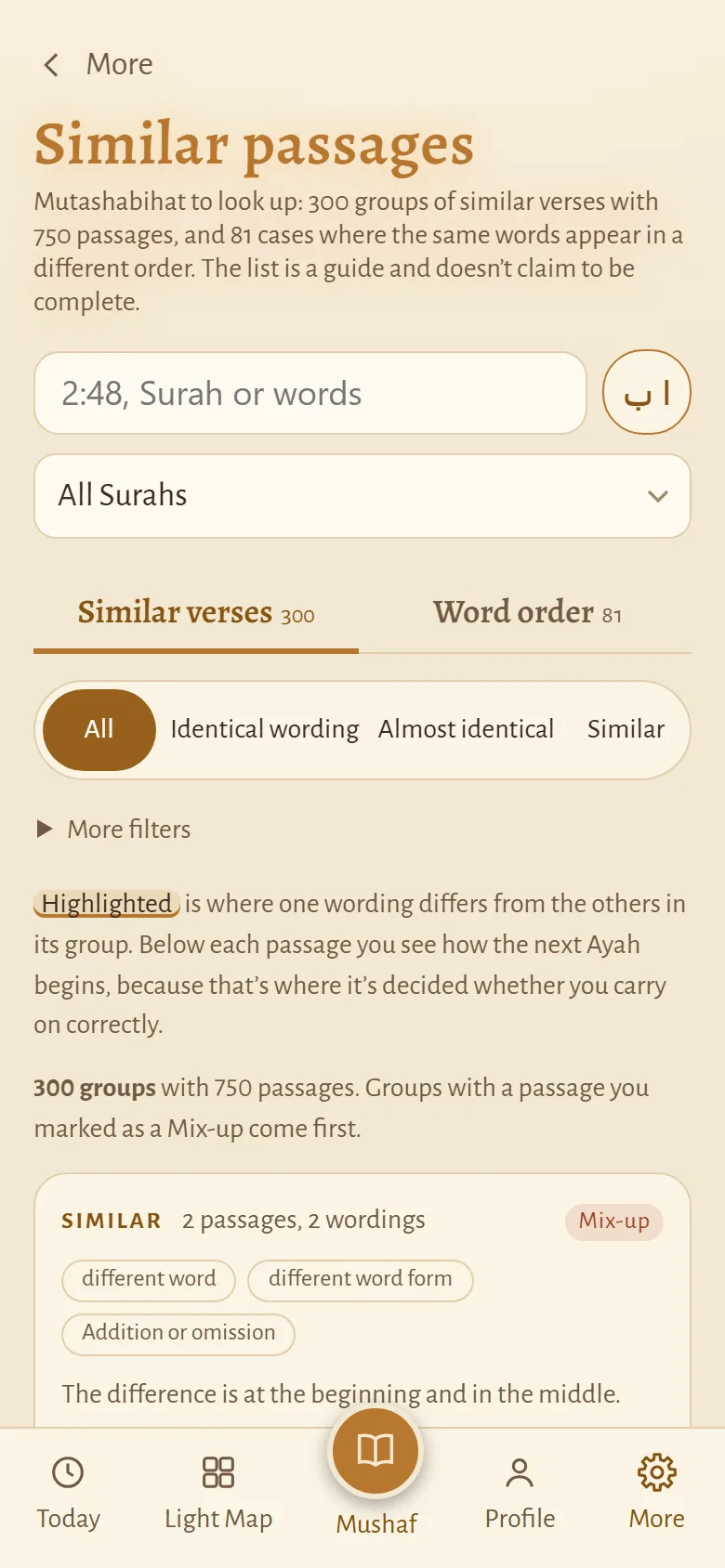
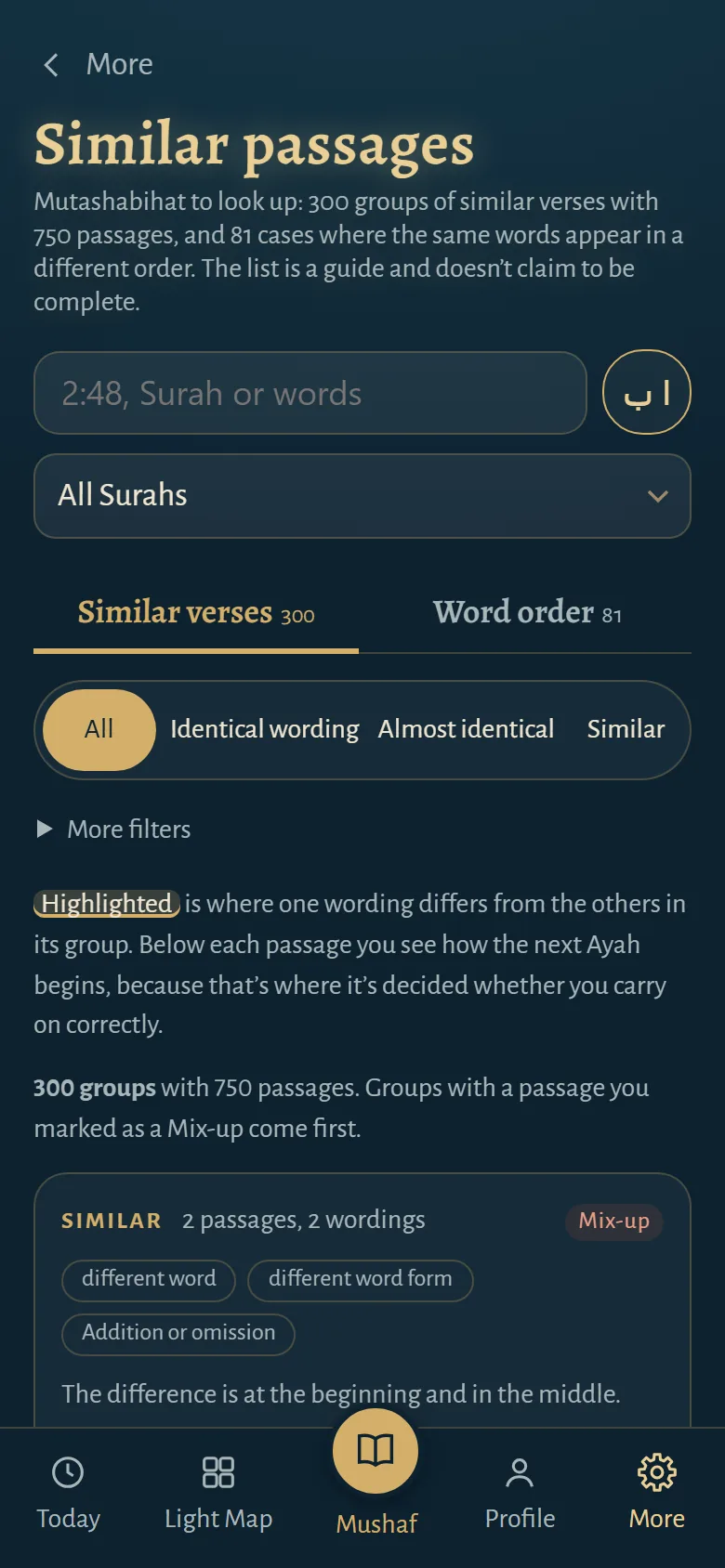
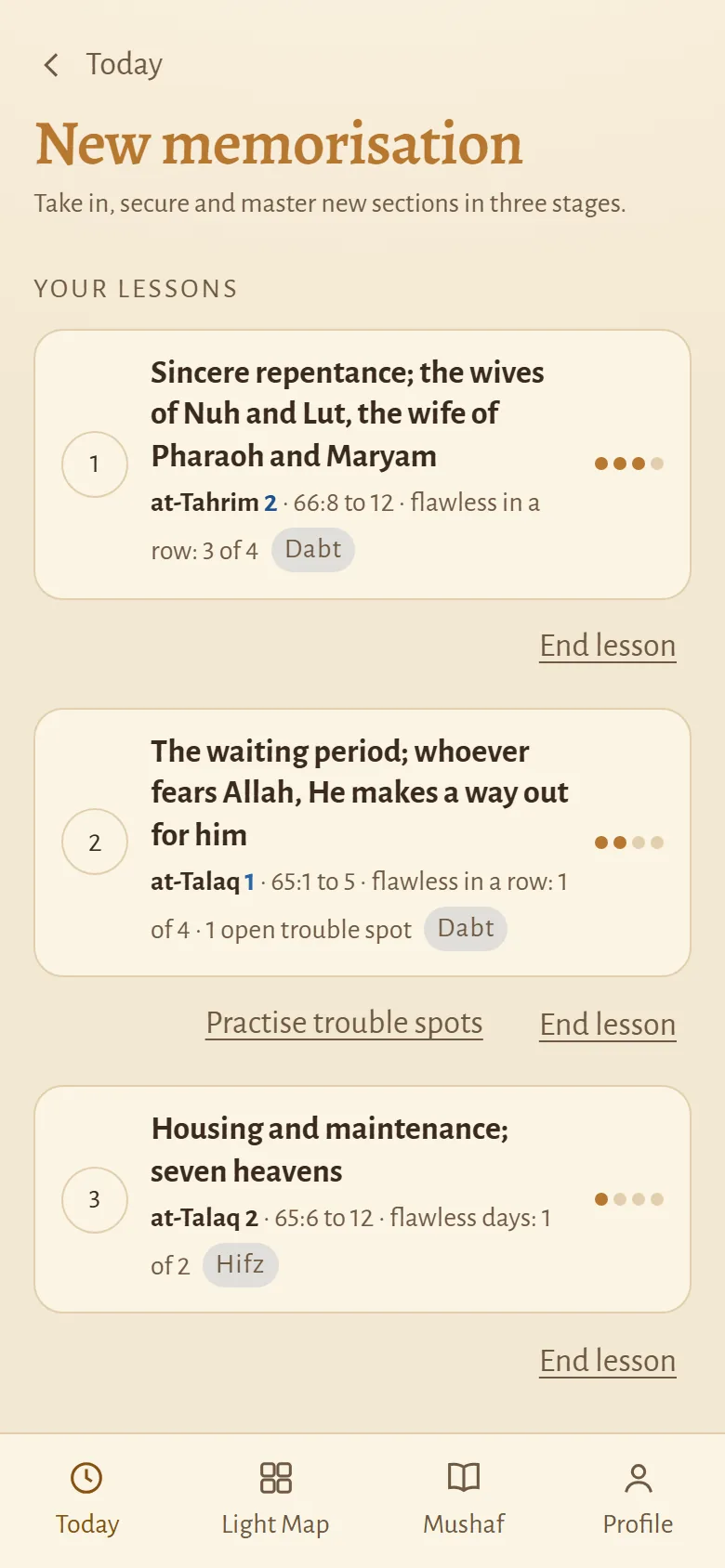
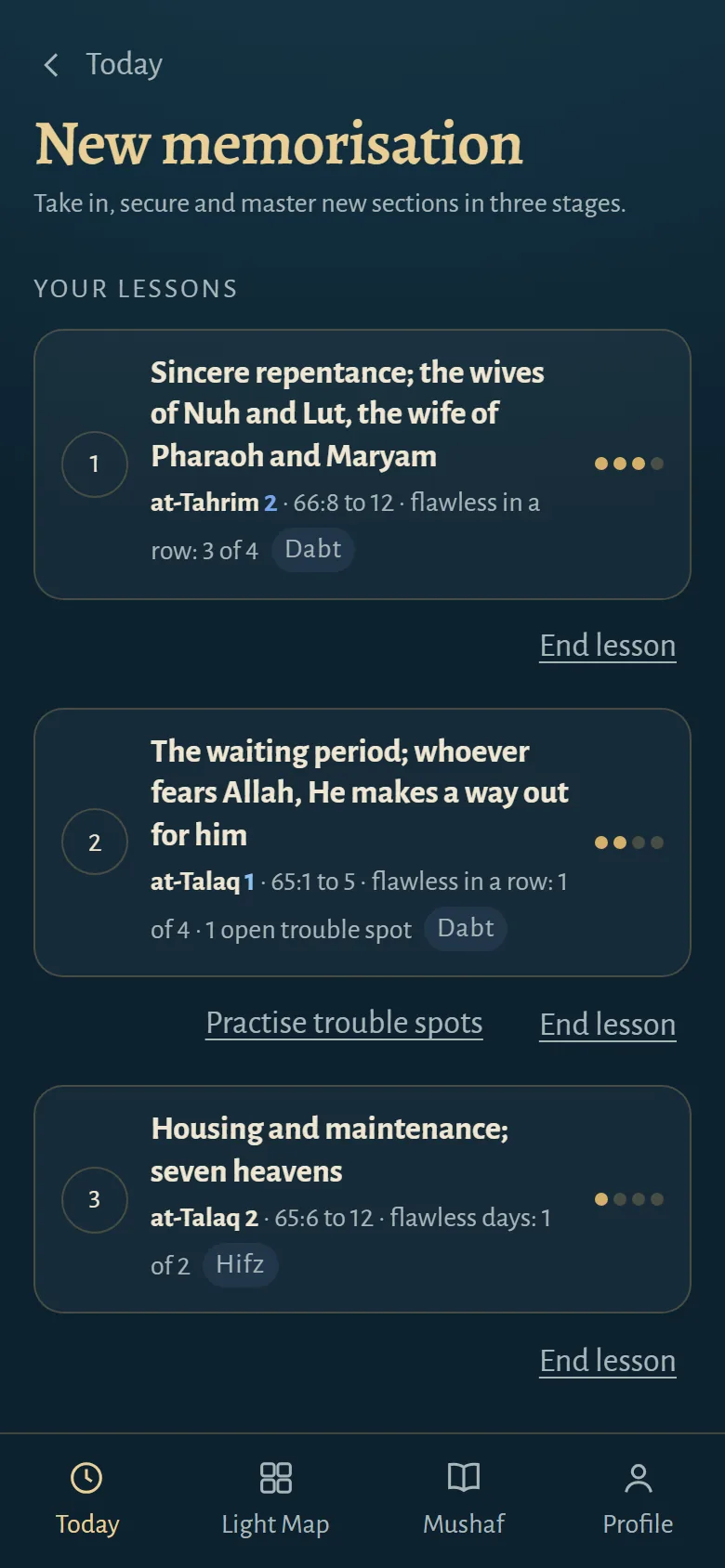
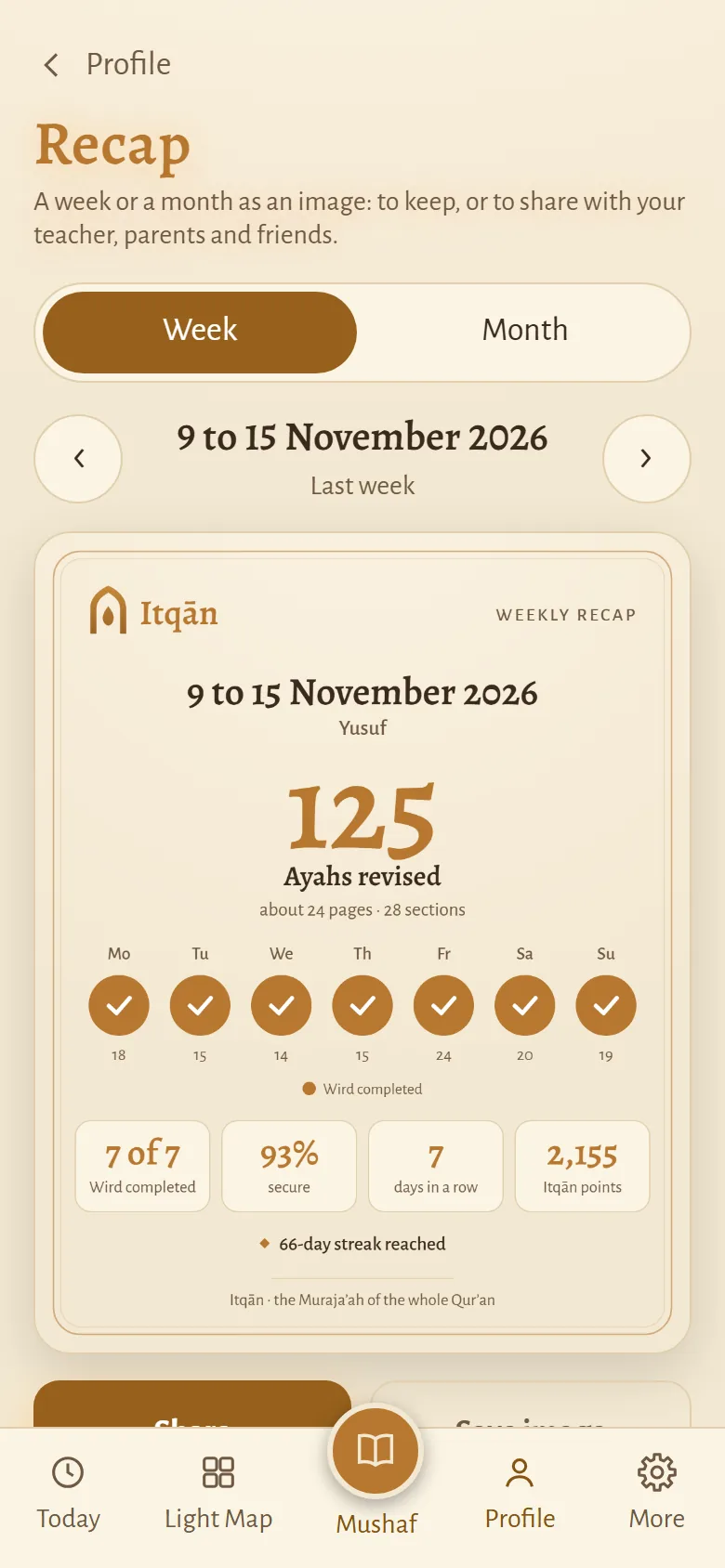
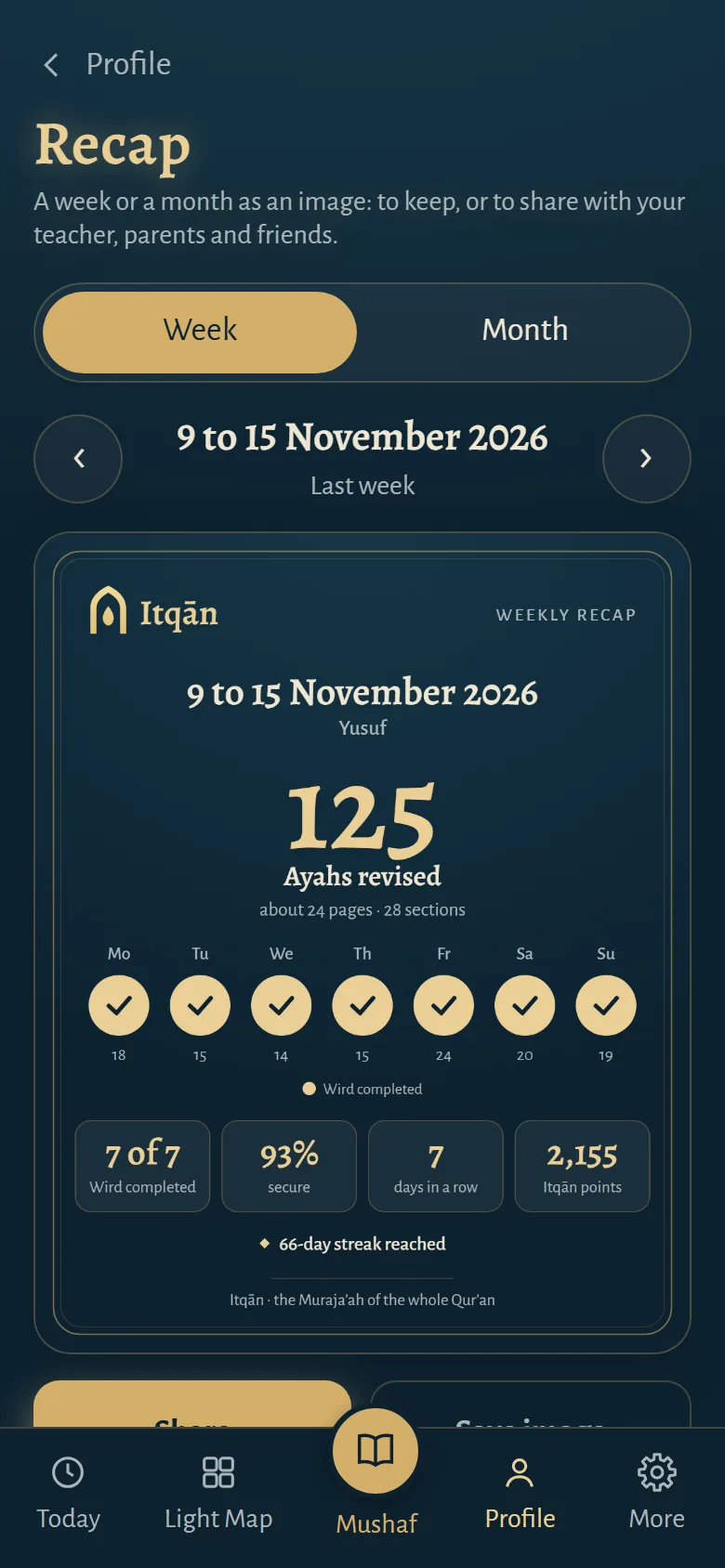
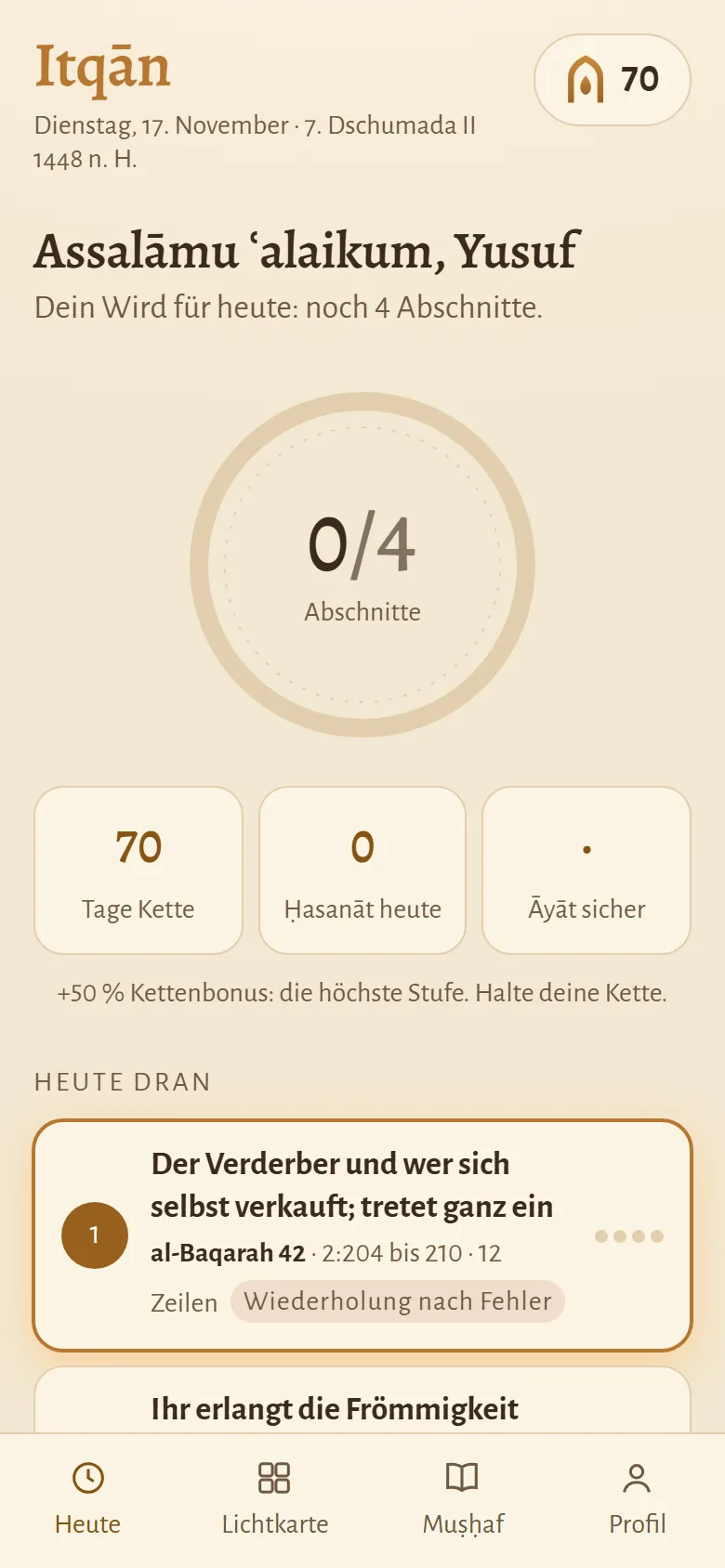
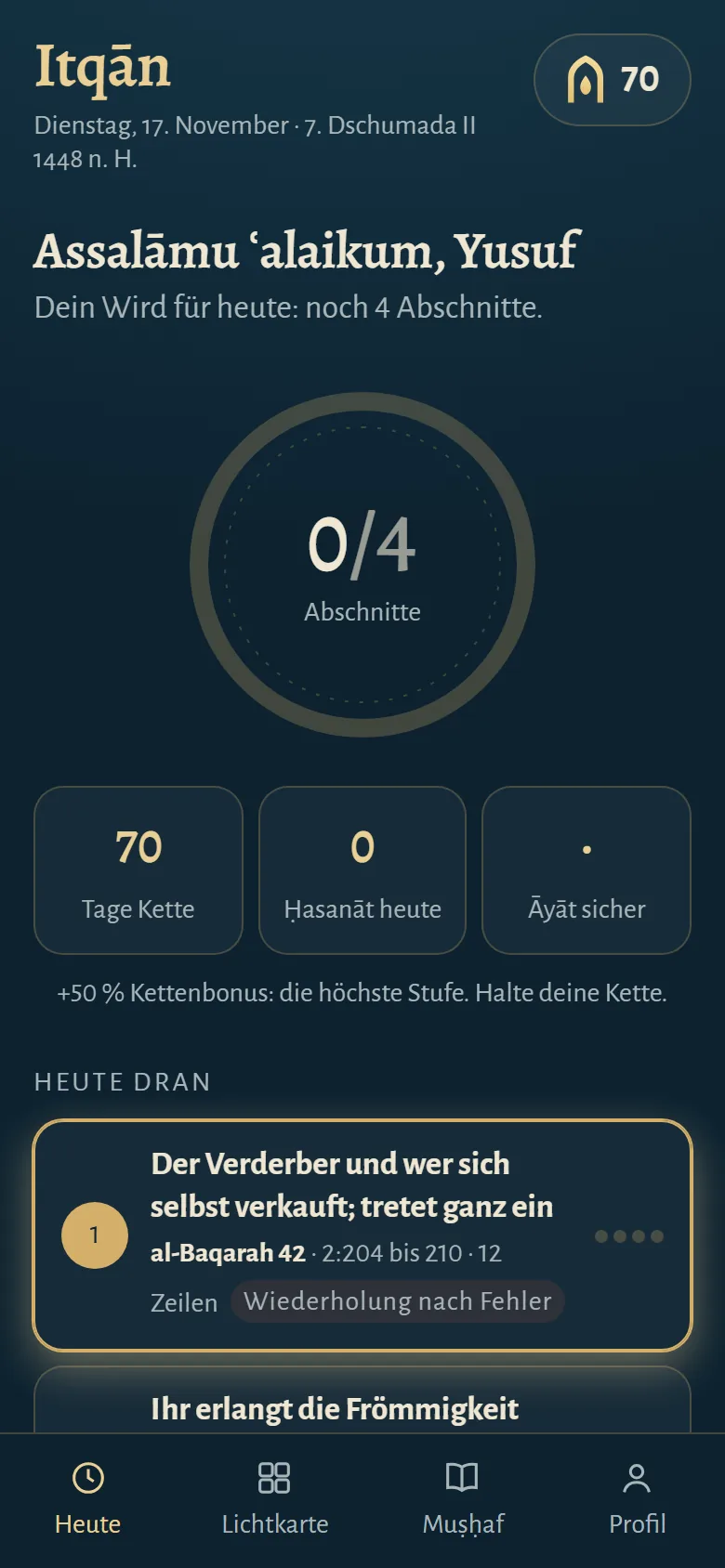
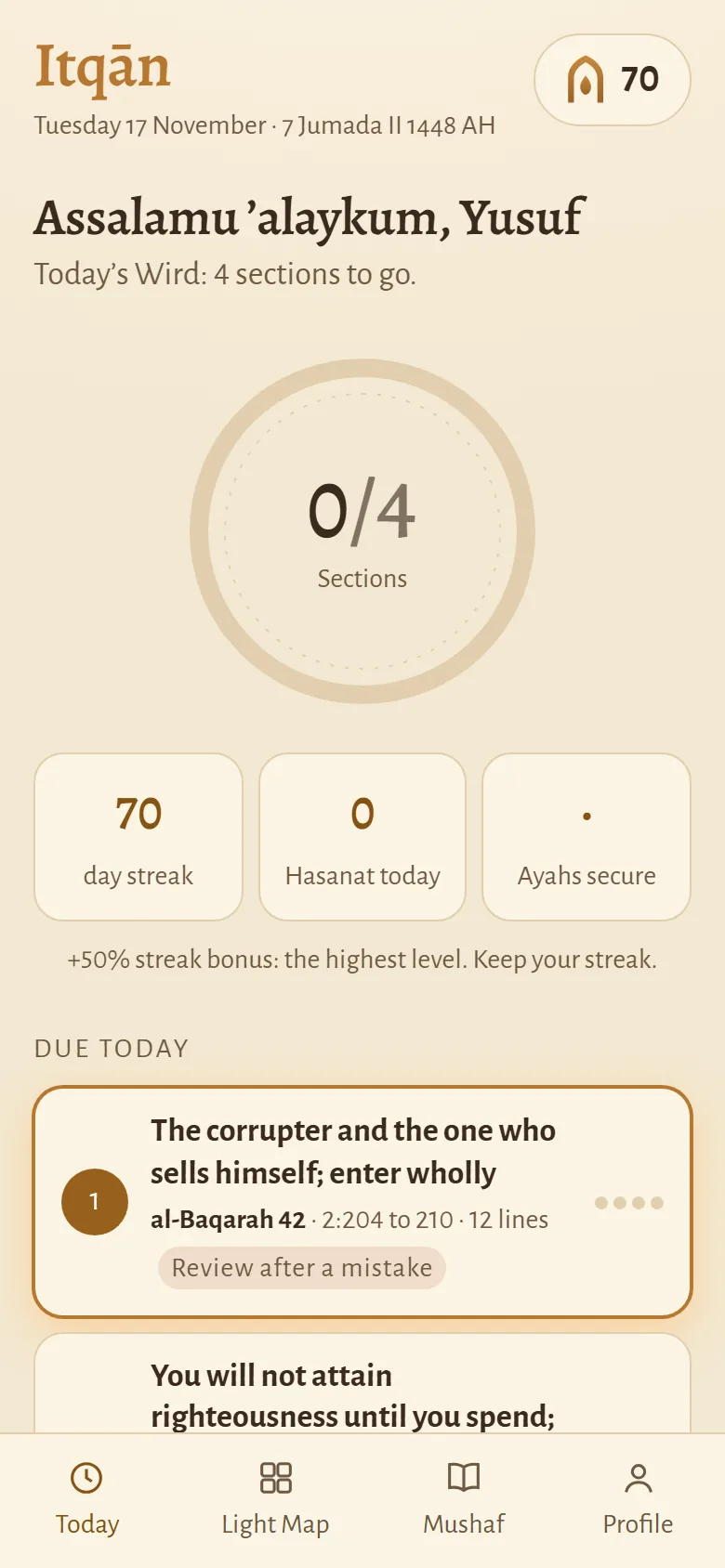
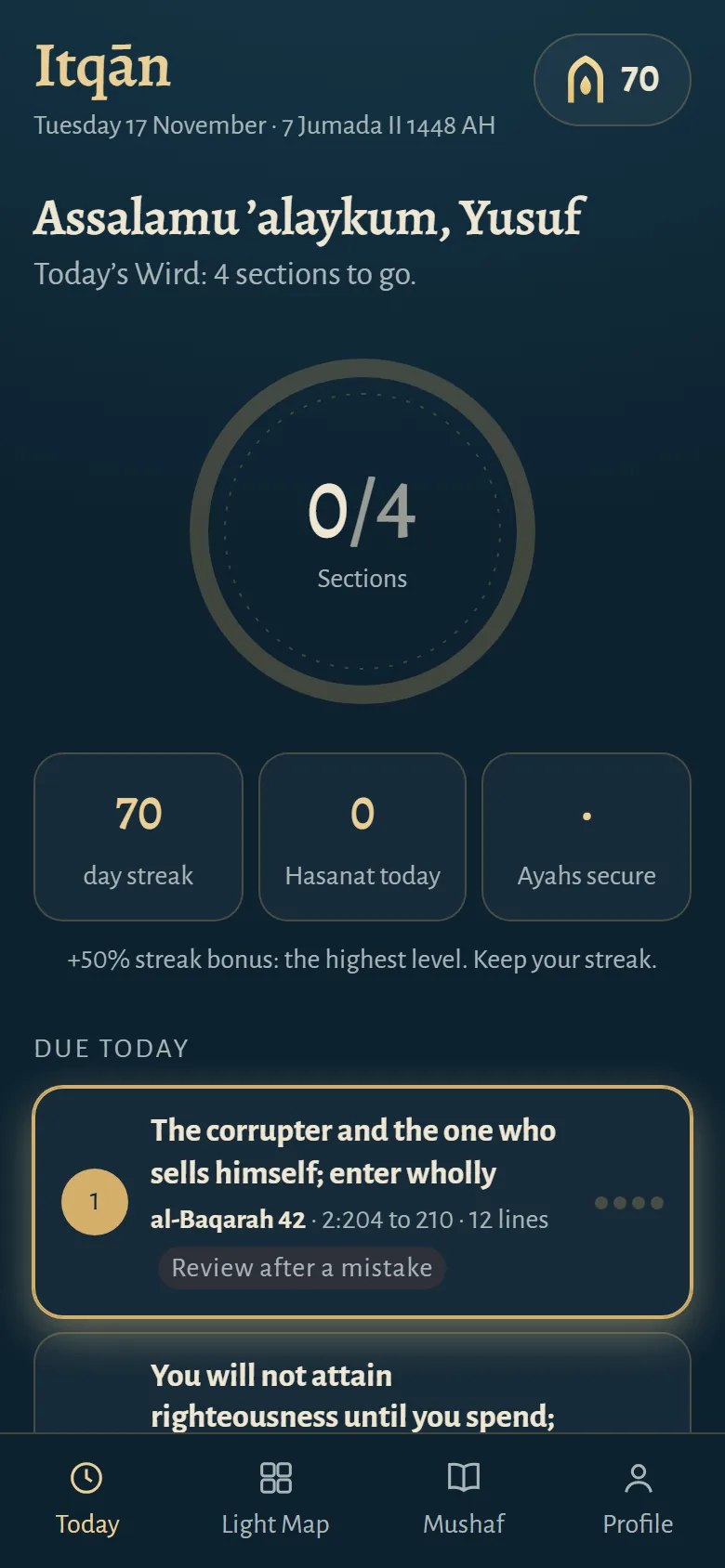
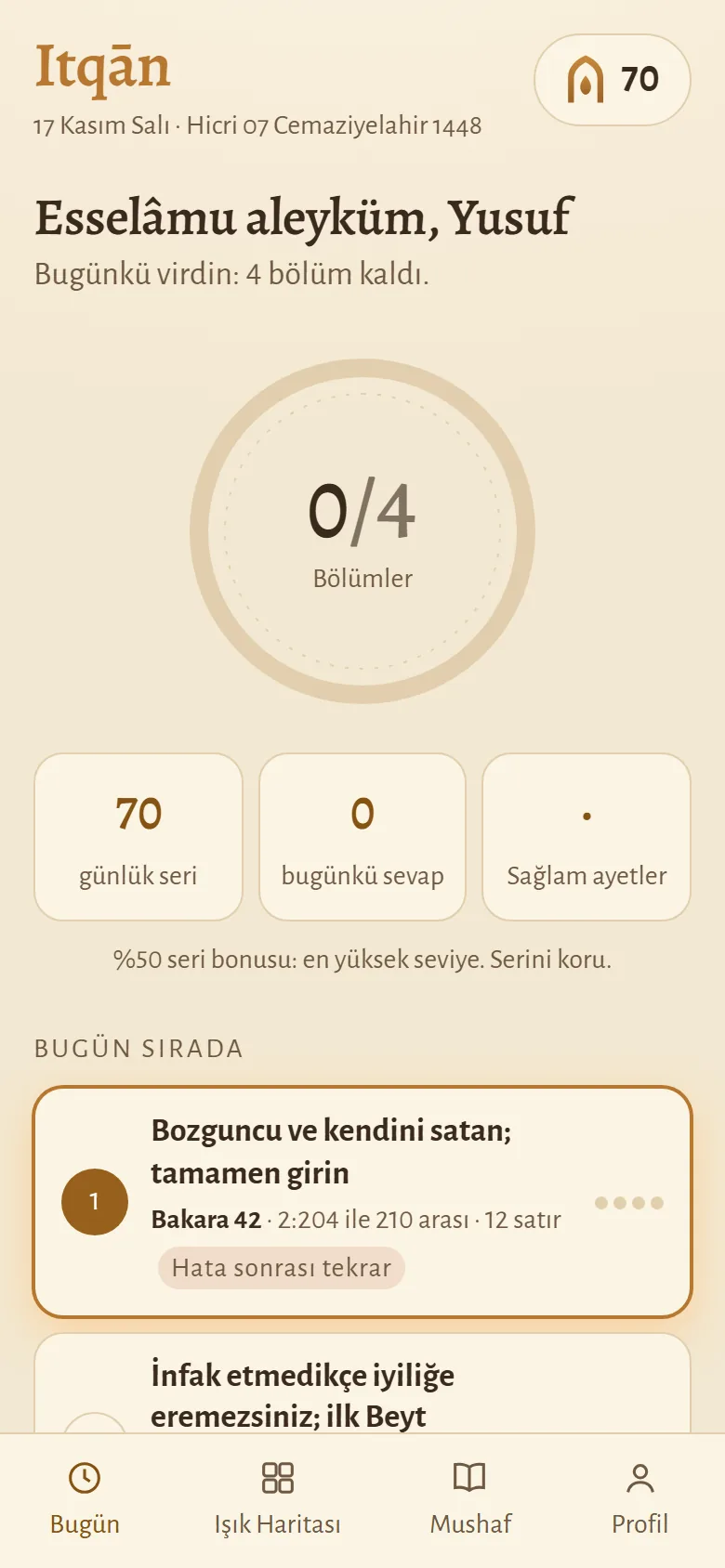
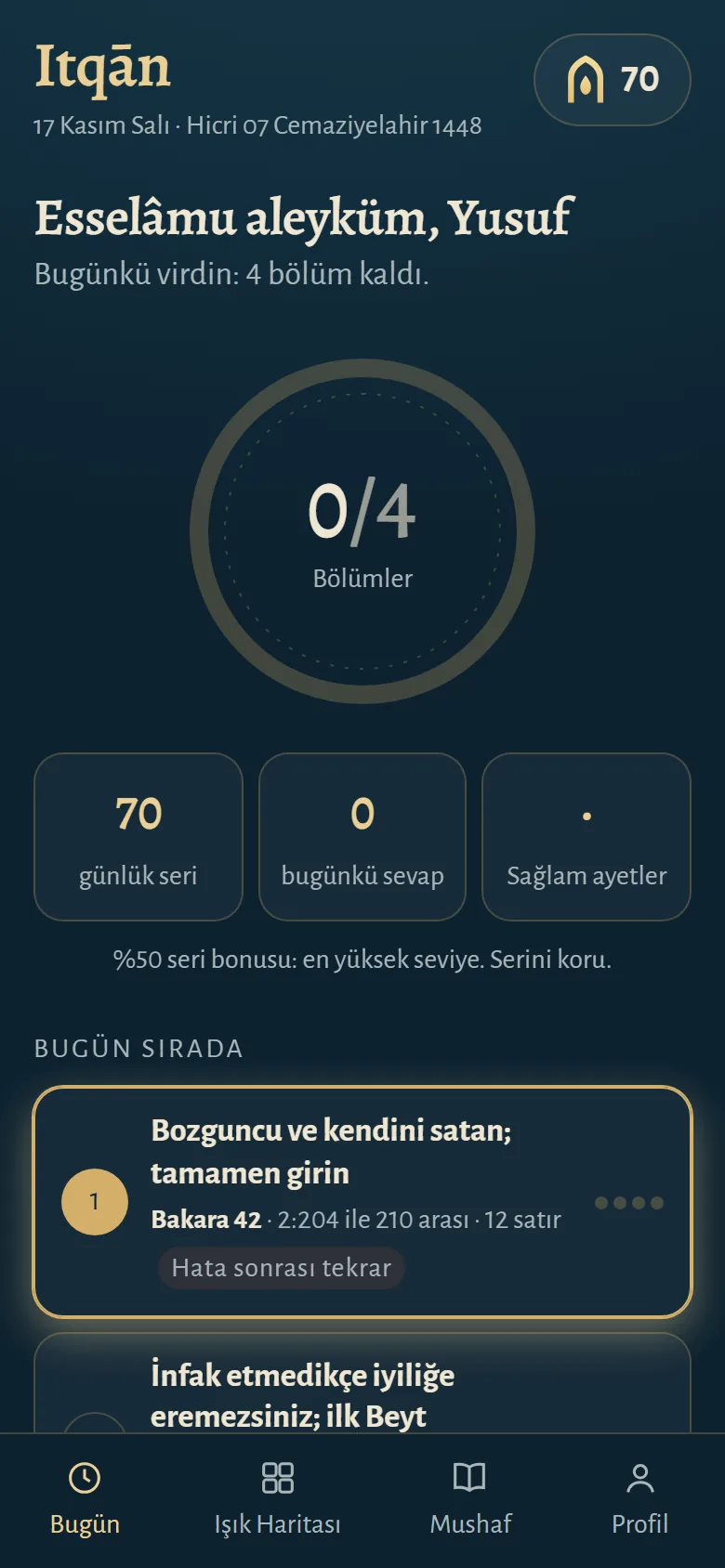
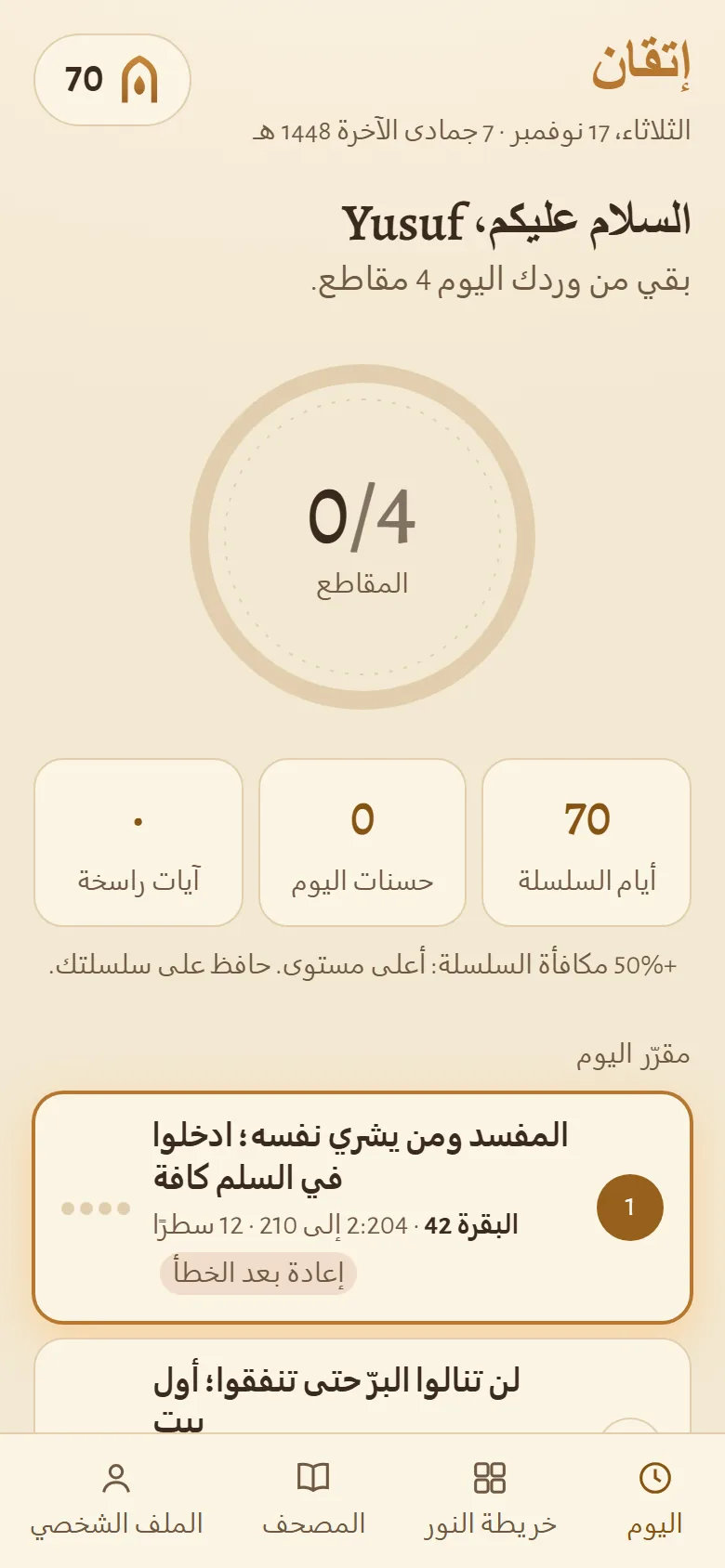
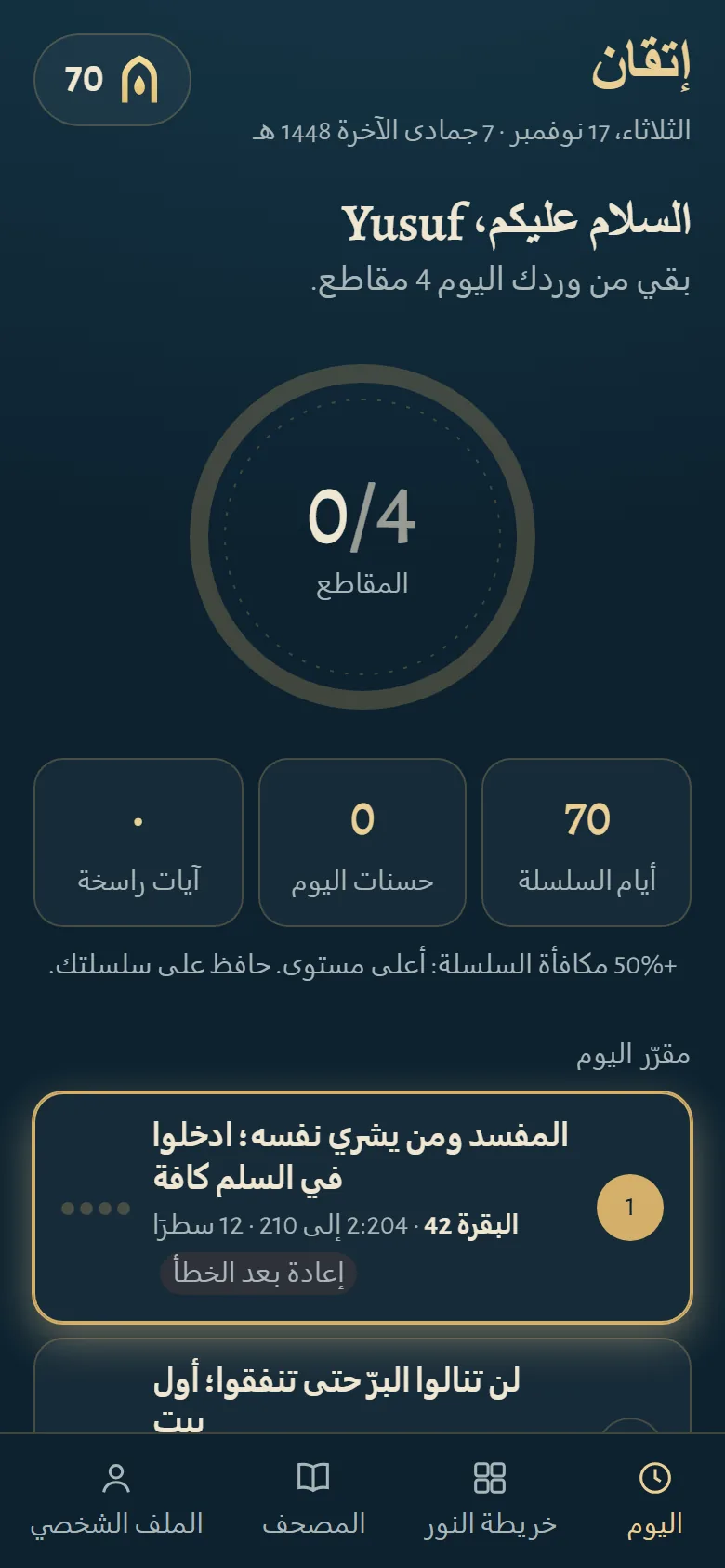
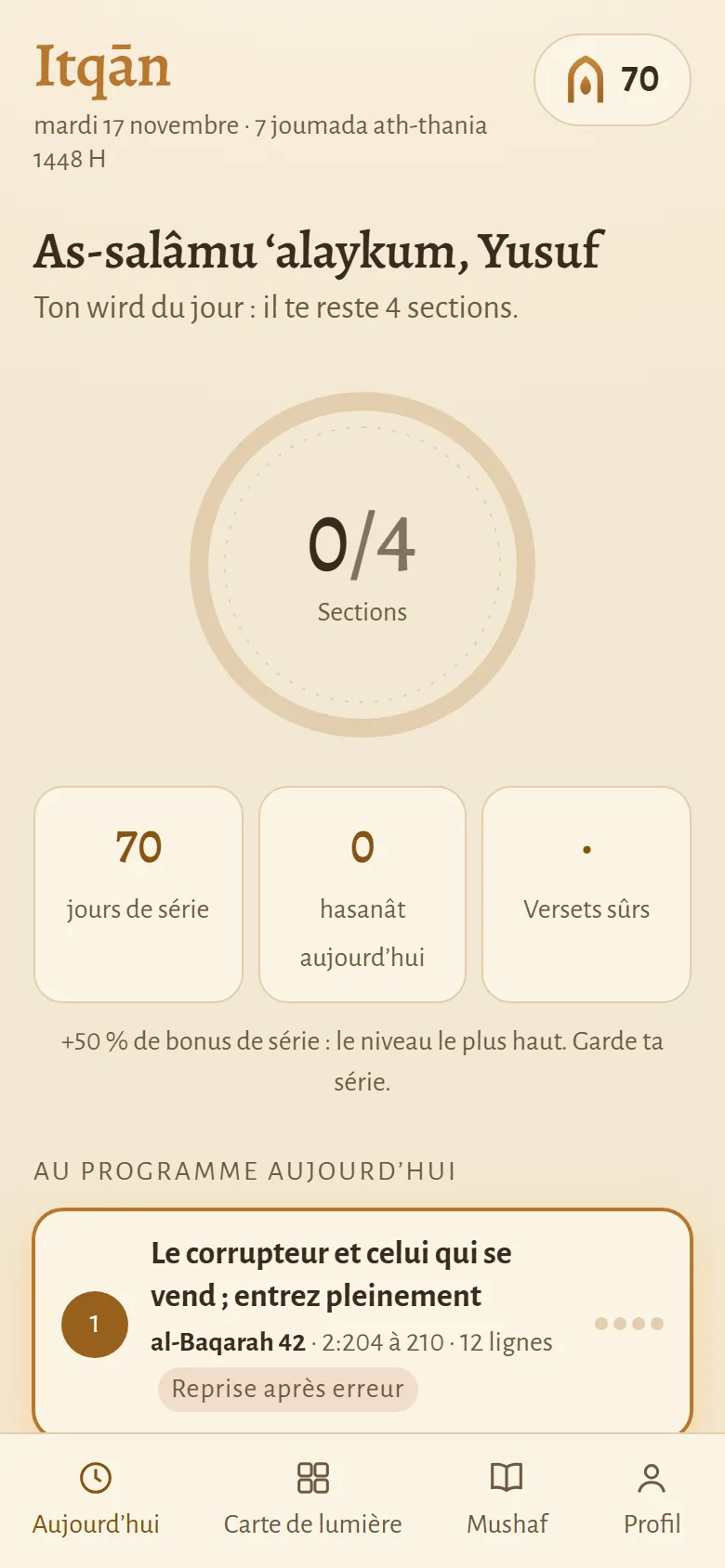
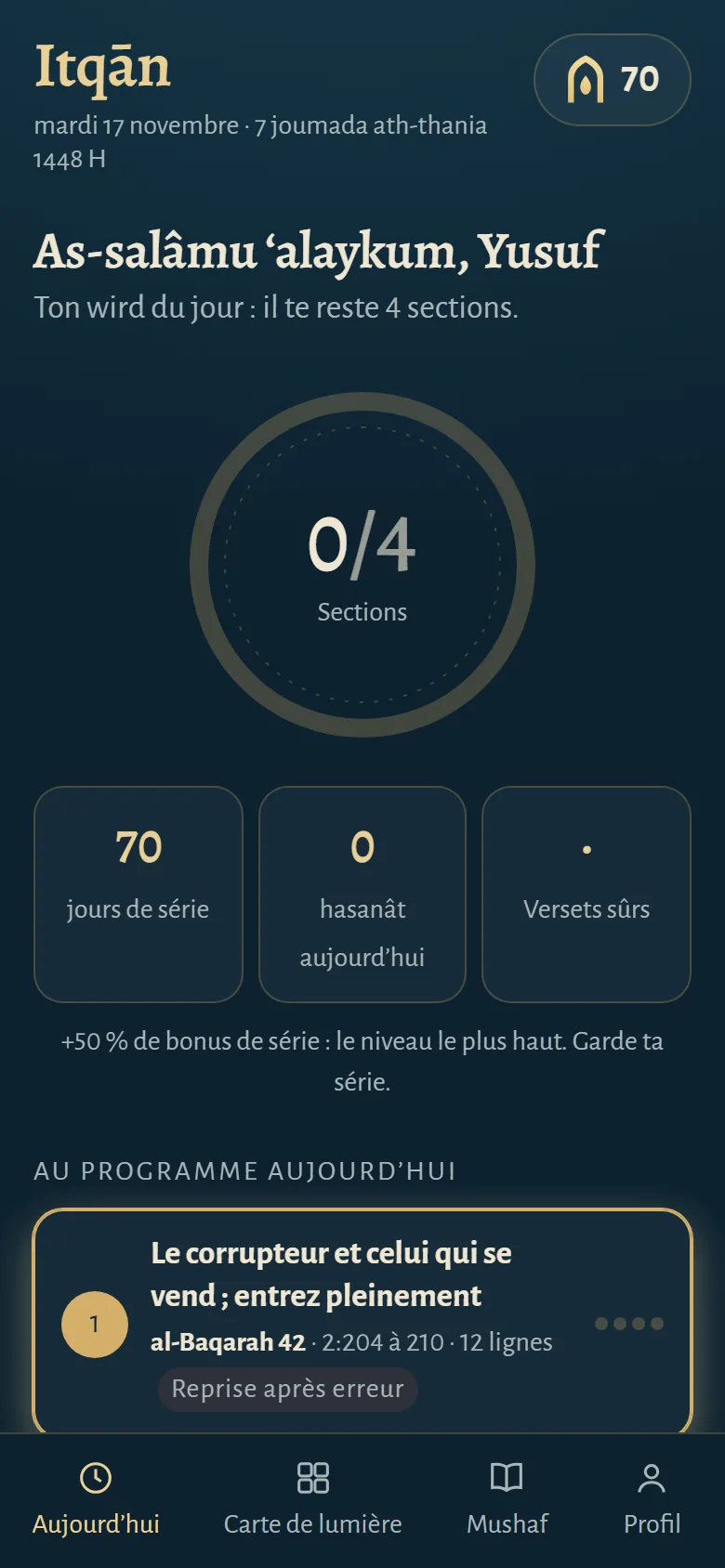
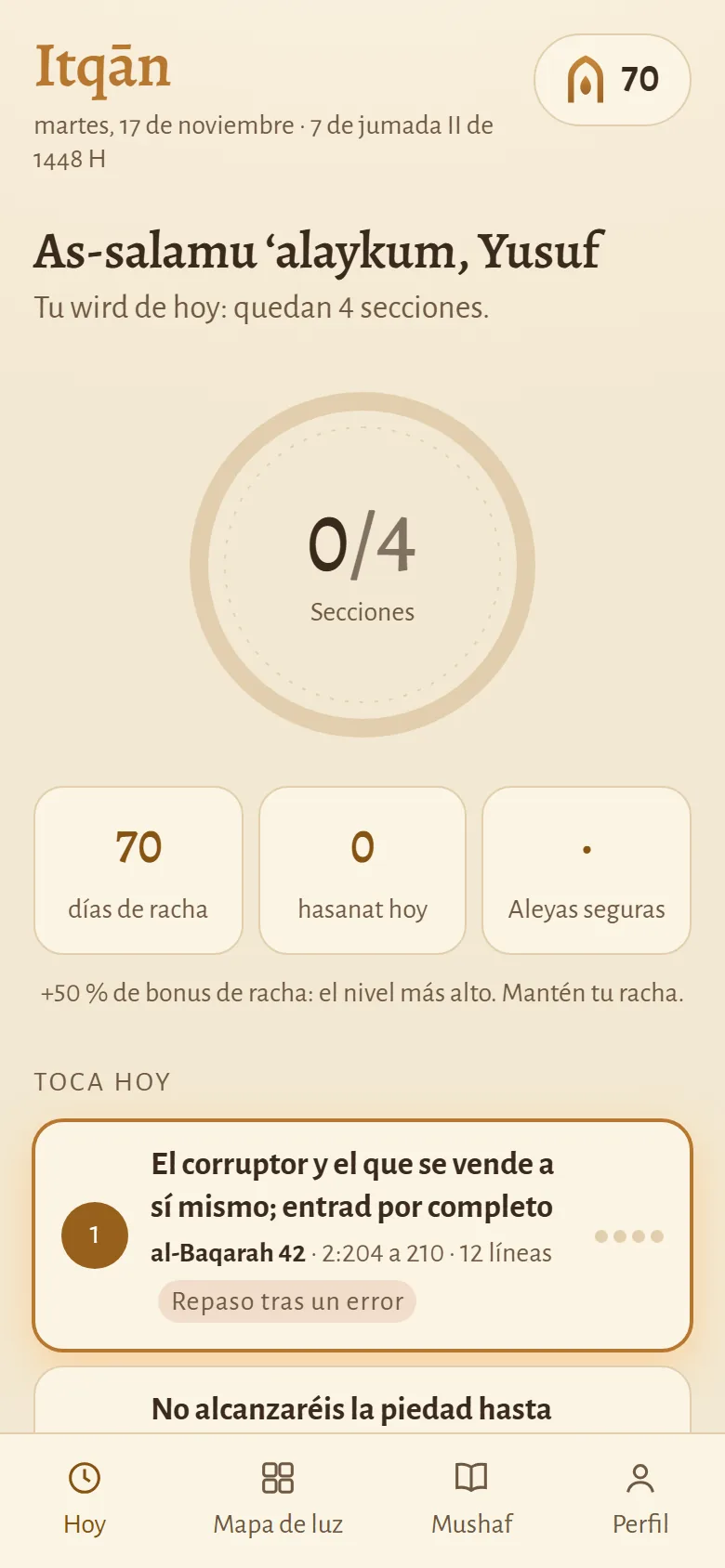
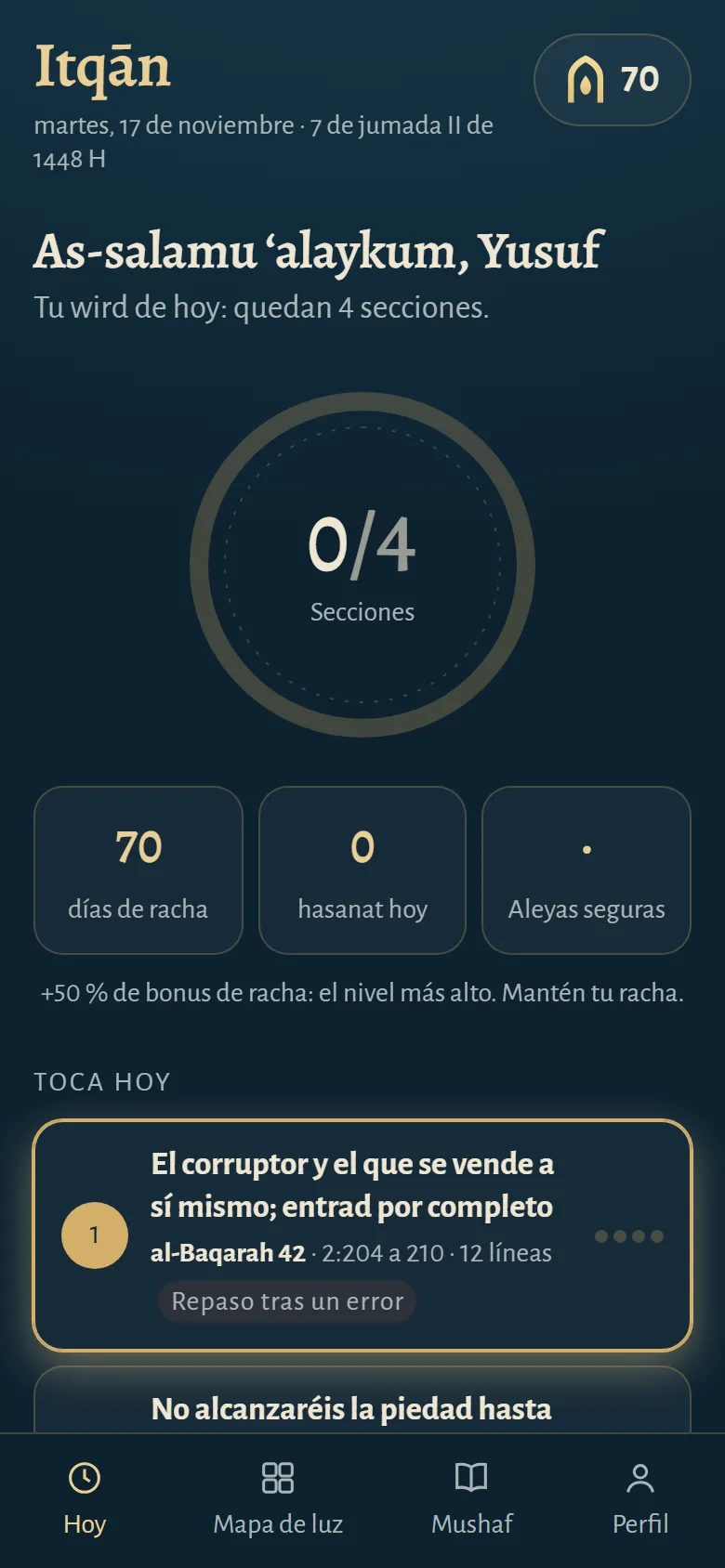
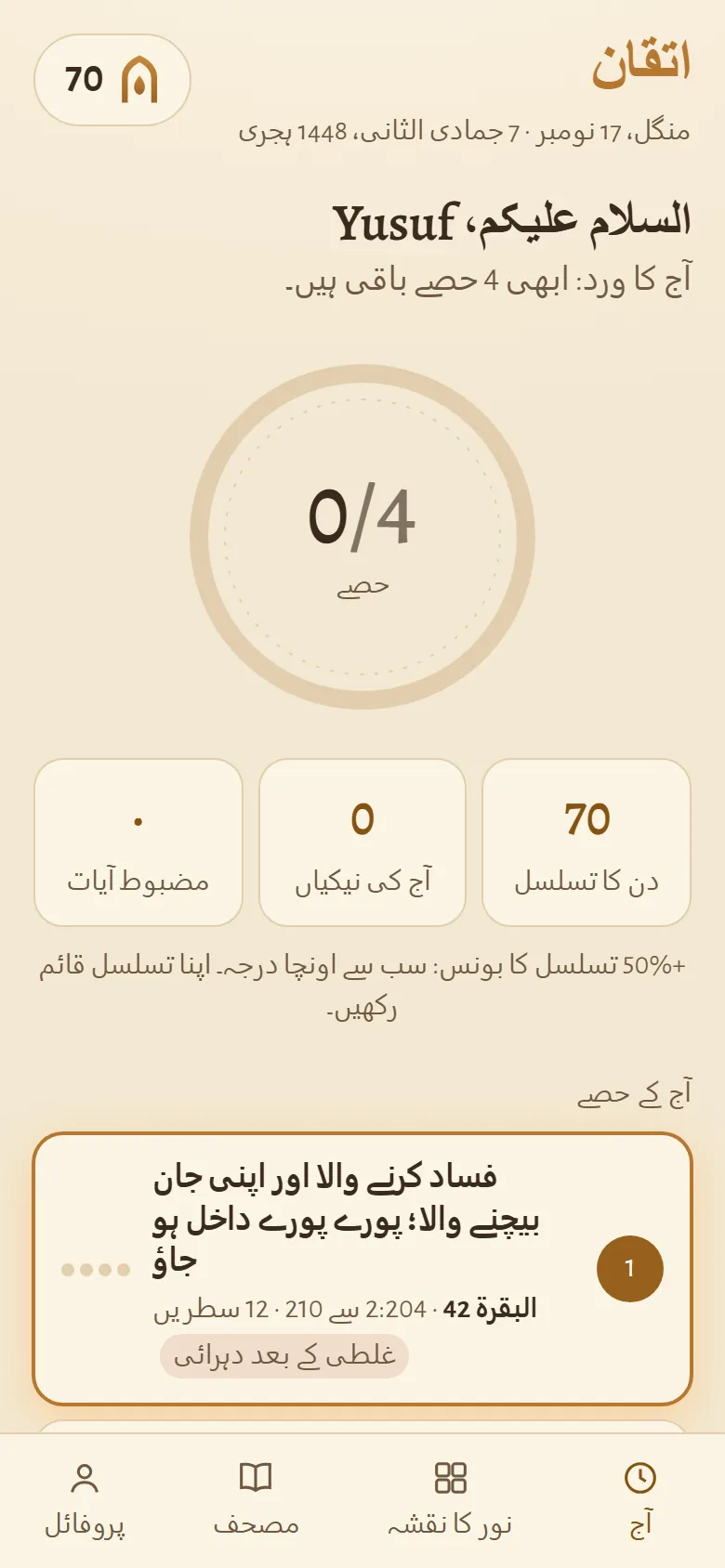
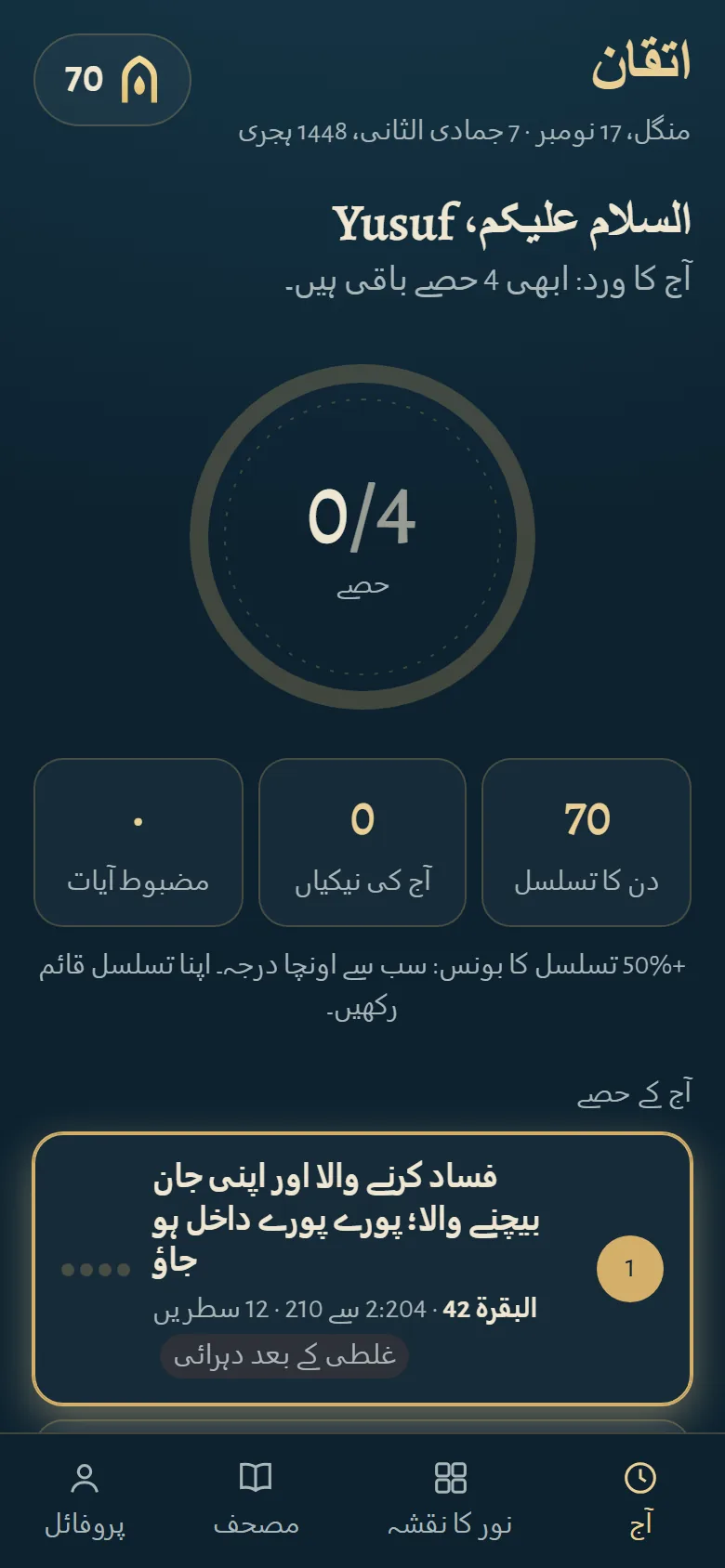
Itqān comes in seven languages, with Arabic and Urdu written right to left. The whole app adapts: texts, dates, numbers and the names of the sūrahs.
Itqān works without an account, offline and with no ads. If you practise on several devices, you can create an optional account: you sign in with a code sent by email, no password needed, and your data is kept on a server in Frankfurt. You can export or delete it at any time.
Itqān comes from ḥifẓ teaching: a teacher built it for his students and improved it with their feedback. If something is missing or gets in your way, write to us.
Write to supportThat is all it takes to begin.
Coming soon to the App Store and Google Play